Twenty-Eleven/Twenty-Twelve

It has been a long, strange, year. On one hand it felt like it disappeared without a fuss, slipping away, month by month, day by day. Winter became Spring, Summer then Fall in a blink of an eye, but so much happened, both in the world and personally that it has its own weight and import.

And now here we are. Over the anticipation and into the 3rd day of the year two thousand and twelve (try saying that three times fast) with resolutions crying to be made, and best of lists flooding the Internet. I’ve had a year of personal triumphs and losses along with professional challenges that forced us to embrace change.

So 2011, Twenty-Eleven 2-0-1-1 I’d like to bid you adieu.

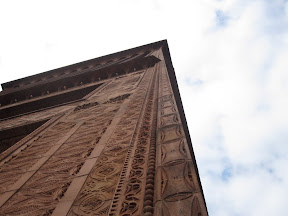
Guaranty Building in Buffalo, NY

I am grateful for another year of family. For a wedding that made it grow, and for support when personal losses flew in unexpectedly.

I am grateful for another year of friends. As my thirtieth year on earth begins, having known some of these people for up to ten years has enriched my imagination, my world view, and my heart in the ways that only friends can do.

I am grateful, once again, for a year where I could walk into work and write and talk about something I believe in and love, even when it was hard (and at times, it still is). Change is a funny thing. When you know it is coming it can be frightening, a looming monolith–daunting, but as it sweeps in it can force you to look at old ways of working and push you in new directions. Optimism is my greatest weapon.

I know I haven’t made mention of some of the larger events of the year—of stories that we’ll be talking about as historians for years to come. Tsunamis, Earthquakes, Tornadoes changing the narrative of nations and small towns for decades to come. Believe me those larger events made an impact on how I view the meaning of place and where we came from in a new light. And the death of a friend this summer emphasized that life is fleeting, and that so much of what we have needs to be embraced right here, right now. 

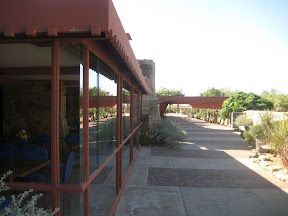
Taliesin West in Scottsdale, AZ

And then there  are the typical “best of” lists. As always this is a reflection of things I’ve discovered/read/listened/saw this year.

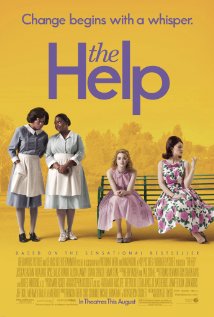
Books : The Help, People of the Book, The Hunger Games Series
History Exhibitions: Maximum India, Taliesin West, Martin Luther King Memorial
Music: Sigh No More (Mumford and Sons), Collapse into Now (REM), We Are Young (Song by Fun. As heard on Glee and Chuck).
Television: Game of Thrones, Downton Abby, The Hour, Doctor Who
Movies: The Help, The King’s Speech, Harry Potter and the Deathly Hallows Part II
Theatre: Les Miserables, Hamlet, The Heir Apparent

Many of the items on this list I wrote about on the blog this year, while others have flown in under the radar (including my recent love for David Tennant and Dr. Who. As a historian, watching a Time Lord fly around space during different historical periods is amusing and at times, surprisingly poignant.) Downton Abby (Season 2 starts January 8, Season 1 is available on streaming via Netflix Instant and PBS.com) and The Hour are two other series that I haven’t talked much about on the blog, the first has been written about in many places—great acting, great drama. The Hour, a six episode series set in England during the 1950s about a one hour news program, has an intensity that surprised me.

Each of these pieces of pop-culture fed my creative soul, made me learn something new about storytelling, and were, above all else, fun to listen to, watch, and see.

So….Twenty-Twelve, what can I expect from you?

My resolutions for the year are complicated. They range from the personal (eating habits, work out goals) to the aspirational (write more, dream more). Above all else I see 2012 as the year of getting organized, to continue to live my life in a way that helps others and sends love, peace, and kindness out in the world.

It is certainly going to be an exciting year. The Olympics, the 2012 Presidential Elections (to name two) that are sure to make headlines. There will be stories to be told, and lives that will be changed.

It is also a year of moving the needle, and raising the bar. Challenging myself to take risks and leaps that I have only taken tiny, hesitant steps towards in the past. Figuring out what does come next for me personally, professionally, and creatively. So no matter how we write it 2012, Twenty Twelve, 2-0-1-2, this is the year of living life.

Prelude to The Power of the Cover: The Deathly Hallows

Eleven years ago July (ELEVEN years!). I’m on my way home from an internship, just a few weeks before I go to college. It is Pre-Twitter. Pre-Facebook. Pre-easy access to the internet.

Map of the blue line. We started off at Federal Triangle and continued straight on until Franconia Springfield.

I settled myself on a blue line train at Federal Triangle with a woman who is holding a pretty hefty book in her hand. It’s a green cover with a cartooney looking boy with horn rimmed glasses.

She ends up sitting across the train from me, but still within my line of vision, and as we travel I find myself without anything to occupy myself, choosing to look out the window instead….and people watch. We approach Crystal City. Stop. At this point I notice the woman looking up with the classic oh I missed my station expression on her face. She half stands, then sits back down, pulling out the book to read again.

She reads on, and we travel past Braddock Road, King Street, and Van Dorn Street easily 30 minutes past what must have been her original stop to the end of the line. She closes the book, finger firmly marking her place, exits out of my train and then renters the one waiting on the other side of the tracks to take her back to her destination.

As I move up the escalator I can see that she is lost to the outside world again, engrossed in whatever is written between the hard green covers.

It was the Summer of 2000, and the book was Harry Potter and the Goblet of Fire.

I want to say that I was drawn to the series because of the cover because even then you could see it in bookstores, coffee shops, and on the Metro. But I wasn’t. I was drawn to the texts ability to draw in the mind, and clearly the imagination.

But it was the cover that told me what to read.

Now, eleven years (ELEVEN!) later I spent the weekend watching the final chapter of the Harry Potter saga on the big screen. Nothing is more exhilarating than Midnight Madness for a movie of a book that changed how you look at fantasy and storytelling. Feeling slightly otherworldly, you find yourself playing Harry Potter twenty questions for two hours as a stream of kids roll by dressed up as the Hogwarts Express in a conga line. In my head I was thinking that this must be how those moviegoers felt when they sat for the first Star Wars movie in 1977—the feeling of wonder and surprise that a story of dragons, and quests, heroes and heroines opens your hearts and makes your imagination travel to new heights.

But while the on screen spectacle was arresting, it was another reminder of just how strong of an impression a book can make. I testify that this series made me smile and at times, cry. There were tears when Deathly Hallows book first came out, and again as the revelation that we had all misjudged a certain potions master played out across the screen. While this series grew up with its primary audience, I can say that it saw me through my twenties–through college, grad school, job uncertainty—essentially the start of my adulthood. And so while I was never in the same age range as the trio of friends, I recognize the impact the story had on my love of storytelling and writing.

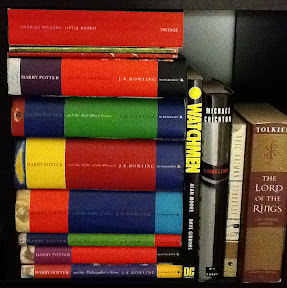
My Harry Potter Books, along with a few other of my favorite titles. PS: If you haven't read Little Dorrit I highly recommend it.

As for my physical copies of the books? I really did end up choosing them based on their covers. Even though I was curious after that initial metro ride, it wasn’t until a trip to India that I started collecting my personal copies. Each book has its own story: 1, 2, 3 & 4 I got in Mumbai during a family vacation (though at the time 1-3 were in paperback, my mom got me the hardcovers after someone donated them to her library). Book 5 (Order of the Phoenix) I bought in the States, until a fortuitous trip to visit a friend revealed that this was the only book where she had the British version, so we made a switch. Harry Potter and the Half Blood Prince made it to my shelves after a midnight purchase in 2005, another midnight trek to a bookstore in the London suburb of North Harrow.

For Harry Potter and the Deathly Hallows I was in New York City, moving my sister into her first apartment. I stood in line, by myself, at the Union Square Barnes & Noble, until someone told us (well past midnight) that there was another store a half a block away with no line and plenty of copies. I’ve never read a book faster in my life. (Once again playing switcheroo helped me complete my matching set as a friend visiting abroad made an exchange when she returned to the states.)

After seeing the movie this weekend, I wanted to write a piece in farewell. However, I realized I’m not quite ready to say goodbye, and probably never will be. Many articles this week have listed favorite parts, characters, objects—and have posited clever praises on Rowling’s femininity (or lack there of). Instead I thought I would leave you with a passage in the book that made me think—one that speaks to the power of imagination, but also of knowing your own self—and trusting what is in your own heart.

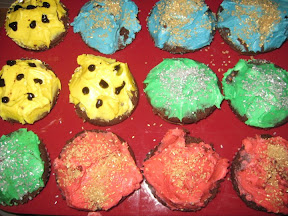
Cupcakes from Midnight Madness. Three for each of the Hogwarts Houses. Recipe for Cake and Buttercream from Real Simple Magazine (Click to view).

From Harry Potter and the Deathly Hallows (pp579)

“Tell me one last thing,’ said Harry. “Is this real? Or has this been happening inside my head?”

Dumbledore beamed at him, and his voice sounded loud and strong in Harry’s ears even though the bright mist was descending again, obscuring his figure.

“Of course it is happening inside your head, Harry, but why on earth should that mean that it is not real?”

The Sorting Hat Says Goodbye

When we first met he was very young
As, of course, were we
But as we grew, he found his place
To fight Voldemort and be Free

In our minds the wonder sparked
And imagination soared
Whimsical and fantastical
We were never bored

And then the end in published form
Came to say goodbye
But we all knew we’d still have
On the movies to rely

Soon there will be no more Harry Potter
To look forward to in time
No Hallows, Horcruxes, or Hogwarts
And I’ll have nothing left to rhyme

So join me on the 15 of July
As the stroke of midnight chimes
And we’ll say fare-the-well to the wizarding world
With a flick of our wands, our hearts and our minds

—P. Chhaya 6/21/2011

Note: More on The Power of the Cover will follow next week.

When In the Course of Human Events

Another Fourth of July has passed. Gone are the sparkling fireworks while the BBQ’s-hallmarks of summer–have been consumed by the hazy heat of the morning after. My Fourth began with a cup of tea with my parents–while Regis and Kelly asked America about the first seven words of the Declaration of Independence.  Heavy stuff  is what they said when the words (the title of this post) were read out loud, and found myself (spurred on by the patriotic Facebook status messages filled with uncommon quotations) digging out my pocket sized Constitution (which also had the text of the Declaration) so that I could think about the complexity of this 235th birthday of the United States of America.

On this day I honored not merely the ideal of America, or the date in which a document (a piece of our civic scripture–to borrow from Pauline Maier) was signed. Rather I chose to recognize the struggle-the one that re-examined our self evident thruths. The struggle that redefined “men” to include race and gender, and molded the meaning of life, liberty, and the pursuit of happiness.

Ironically, my Fourth of July did no include a BBQ or Fireworks. Instead, I went to see “Midnight in Paris”, a film which turned out to be a perfect backdrop for reflection on Independence Day.  In short, the film follows a Hollywood script writer turned aspiring novelist as he is magically transported to 1920s Paris. It is during these “suspension of reality” moments where Gil encounters idols of film, literature, art and culture. As a Woody Allen film, the movie mocks pretentiousness, while also being slightly pretentious–and also in a less than subtle fashion drives full force into the commentary on nostalgia (even to the extent that Gil’s novel is set in a nostalgia shop). The man is caught between his fiance and her friends who don’t understand the magic of Paris, and a slow realization that his forays into the past are really ventures into fantasy.  This mystical Paris in the 20’s pulls those who reminisce away from the demands (or as one character states the “dullness”) of the present and leaves them disconnected–unable to see the realities of the time that they fill with the veneer of romance. As one of my fellow movie viewers pointed out, the past became a way for the writer to feel affirmation and confidence rather than genuinely earning it through his actual actions.

At the same time that Gil is realizing the imperfectness of remaining in the past, he is also acknowledging the beauty of the urban. His walks through the city provided him with vision–and make him, in his mind, a better writer. For  Gil the lure of Paris is in its character both in its modern and historical sense–though even then he uses rain as a way of hiding reality (for Paris is at its most beautiful when it is raining).  It is the city–the power of place–that brings inspiration.

Fourth of July Fireworks (NYC 2011, Thermal view) Taken by T. Chhaya

I thought this was a great way to think about America on it’s birthday. That though the day is filled with nostalgia–summer days with a slightly romantic sheen, our Founding Fathers fighting for our rights against a tyrannical king–we all recognize the reality of the day–the sacrifice and yes, the struggle to get where we are. That the power of our place– our country –is not just in the sites we like to visit, but also in our people who make history with every vote, every breath, and every step.

O! say does that star-spangled banner yet wave. 

O’er the Land of the Free, and the Home of the Brave. 

Hodge Podge: On Memory, Weddings, and Original Recipes

I have been working on this post for a few weeks, but alas the post-wedding catch up has taken over, plus every time I think I am done something else comes up that I want to add to it. But sometimes you just have to hit publish!

We will start with a quick word about weddings. Historically speaking weddings are the bringing together of two families and thus creating a new path of history. Two stories become one thus creating a new narrative.For those who love genealogy these events and the documentation of these events will one day let our great, great, great, great, grandchildren trace their own ancestry.

In addition to the immaterial the actual physical landscape of a marriage reveals heritage and culture, an opportunity to show the more recent past of the bride and groom. For my sister it was the trappings off India mixed in with with the quintessential American rituals (the first dance, cutting of the cake). My friends Mary and William embraced their inner Irish and love of fantasy for a ceremony filled with beauty and heart a week later.

For this hodge podge I’ll talk about This American Life episodes, a play on memory by Harold Pinter, a short conversation about fictionalizing the past through Geraldine Brooks’ work People of the Book and Year of Wonders, and finally a pop culture meets history link.

This American Life

There are actually three episodes that I wanted to talk about here. The first was an episode about Kid Politics. Where reporter Starlee Kine describes a program at the Reagan Library which asks kids to reenact the invasion of Grenada. While the show looks to see if kids make better decisions than adults, I found myself reacting to the subtle cues the library educators used to emphasize that the presidents decision was the “right one”. The kids who spent some time learning about Grenada before arrival are divided into three groups “the president and his cabinet”, “the military”, and “the press.” Than whenever the student makes a decision that Reagan did not make a light flashes along with a loud buzzer and a red light. On one level it is one way to indicate that the President made a different decision, but I think that by painting other options as wrong or right pushes kids away from critical thinking/analyzing presidential history as a series of decisions rather than because it happened this was the only course we could have taken.

The second episode had a segment that examined a television show, “This Is Your Life.” The premise interviewing individuals, and then surprising them with a carefully constructed vision of their life. Two separate episodes brought on a Holocaust survivor and a Japanese man who survived the atomic bomb-introducing these very sensitive subjects to the American audience in a way that they had never been discussed before. Each person also had a “surprise” guest–in the case of the Holocaust survivor it was a fellow camp mate, while the Japanese man (who was in the United States getting operations for girls who had been disfigured from the blast) was presented with one of the pilots of the Enola Gay. “This is your Life” seems almost like a modern day reality show. In both cases described above the individual being profiled used the show to bring awareness to what had happened to them, despite the shows structure feeling a little intrusive and voyeuristic.

And finally, for a light-hearted turn. Ira Glass believes he found the original recipe of Coke. While it is possible that it is a version of the drink we all know and love, this episode is a testament to the power of the document. Of finding things in boxes years from now that can tell a missing story. Above all else this episode showed that history is fun…especially when it involves an element of food ways and a little history of an American industry, regulation history and pop culture all at once.

Shakespeare Theatre: Old Times

The second to last show of the 2010-2011 season wasn’t a traditional tale by the bard but rather a reflection on memory written by Harold Pinter. The two leads are a married couple Kate and Deeley (played by Stephen Culp, of West Wing Fame, and the Tracy Lynn Middendorf who played Bonnie in LOST), who are expecting an old friend of Kate’s named Anna. In the course of the show, the play becomes less about a visit, and more a battle of remembrances between husband and guest. It is stark full of imagery that asks the audience to question, what is real what is true, did that really happen. It’s at times funny, yet equally gloomy as tension rises. Yet the woman at the center of each memory, Kate demands no attention. She seems content to live merely as an object of this memory, trapped in her own thoughts, often letting her husband’s former friend memorialize her as if she does not exist. The show ends in a bizarre parody leaving us to wonder about what memory really is.

I know that we see things one way in the moment, and that with time that vision shifts and is colored by the receding years. Collective memory works the same way. This play fiddles with the past, and illustrates in an evocative way about how even what we believe to be true can change in an instant. Old Times is playing at the Shakespeare Theatre in DC through July 3.

Of the Book: Two Titles by Geraldine Brooks

I’ve been doing a lot of reading, as usual. From fantasy, to catching up on my Public Historian, I find reading to be incredibly cathartic. Occasionally you come across a text so engaging that you feel inspired. This is so with books by Geraldine Brooks. Best known for winning the Pulitzer Prize for March which follows the father in Little Women through his wartime journey, I picked up People of the Book and Year of Wonders. Both books use history as the backdrop for remarkable examples of storytelling. Year of Wonders is the story of a town hit by the plague, and how it voluntarily closes its boarders to keep those outside safe. People of the Book follows a book conservator and narrates her story and that of the object she is trying to save–it is the Sarajevo Haggadah, a real book with a really engaging past. It is an amazing piece of writing–in that as we step back in time with the book’s history we see fragments of the world, of Europe during times of intense upheaval before being brought back to our guide’s life. For anyone who is not convinced that material culture tells us more about the past than anything else–I would pick up People of the Book immediately.

.…and finally

I took a moment for fun and went to see the latest X-Men movie. It was fairly well plotted and takes place during a particular part of the cold war (1962 to be exact). However, like most movies–it gets some things wrong. Ta-Nehisi Coates went to see the movie with his son and tells us about it in “You Left Out the Part About….“. A good opening for a discussion….so tell me what you think in the comments.

Reel vs. Real: Speeches of Kings

I love going to the movies, however with the exception of certain films involving a boy wizard and other sci-fi epics, I rarely go to see films twice in the movie theater.

I made an exception for The King’s Speech. As a historian I often go into historical films with the recognition that the film we see on the “reel” is not at all going to be a one-hundred percent accurate vision of what actually happened, the “real” history. So I was hardly surprised after my first viewing of seeing this article by Christopher Hitchens that talks about the glossing over of Winston Churchill’s real relationship with the royals and it having a very light treatment of the Nazi’s and the issues of World War II.

On one level, this movie isn’t about the history at all. It is about a man overcoming an incredibly debilitating speech problem–one that leads to abuse by his father, his brother, and attacks on his own self confidence–and his relationship with his therapist to overcome that problem. The classic triumph over adversity storyline.

Obviously though, the movie’s additional strength comes from who the man is, and the reason why he has to overcome stuttering. As Bertie (King George VI, played by Colin Firth) points out near the end of the movie, the monarch has no power in England except to speak to the people; and what the filmmakers, screenwriters, Colin Firth and Geoffery Rush did was provide an incredibly humanizing glimpse into a man thrust upon the throne following his brothers abdication–on the eve of another war.

Sometimes a film or a miniseries, demands accuracy on all levels in order to do justice to the story–and sometimes the artistic license is acceptable. However is it only excusable because The King’s Speech is a fantastically plotted and acted movie? That is, would I be quick to defend other films like The Patriot (or even Pocahontas) which whitewash much of the past to serve the narrative?

Probably not–but I try, at least, to see the flaws for what they are–a limitation of the medium, and another example of human subjectivity when it comes to historical truth.  So tonight–on Oscar night–I’ll be rooting for this crew of British actors that were able to move me.

Another Day, Another Year

What’s an end-of-the year blog without an end-of-the-year list? I’ve tried to fill 2010 with a lot of history—from great trips with my family to intelligent conversations with colleagues in San Francisco, Austin and Portland. At every step I’ve learned a little bit more about life, and a little bit more about myself. Below is a list of my top 3’s for the year. Some, like my music picks, are not necessarily from songs released in this year—but since they were new to me, I’m going to count them anyway. Others on the list you might recognize from other posts on this site.

Top 3 Books
Faithful Place by Tana French
French’s third book in the Dublin murder squad series is gritty and gripping, raw and emotional all at the same time. (Like how I used those adjectives without telling you anything?) Anyway if you like great mysteries that are well written check out this book. While reading In the Woods and The Likeness might be helpful it isn’t 100% necessary.

The Immortal Life of Henrietta Lacks by Rebecca Skloot
History. Science. All with a very clear consequence for every individual in the United States and abroad. And all due to one woman whose life changed forever with her death.

Little Dorrit by Charles Dickens
Like I said some of these picks that are new to me—but after watching the BBC/PBS adaptation I had to read the real thing. Dickens, while always providing a dearth of genius does an amazing job showing the shifts between the rich and the poor—and the circumlocution office is just icing on the cake. Not to mention the vivid detail and characters in all walks of life.

Top 3 History Fun
I wrote a lot about these three experiences on this blog. I learned much about the western immigrant experience in San Francisco, saw how you can tell the story of times past through the remains of ordinary people, and catch a unique vision of America (one that is cleaned, up and brightly colored). For that I choose Angel Island, Written in the Bone, and Telling Stories: Norman Rockwell from the Collections of George Lucas and Steven Spielberg.

Top 3 Music Picks
Rodrigo y Gabriella: Awesome strains of drifting guitar, rich in melodic sounds and rhythmic beats.

O’ Children by Nick Cave and the Bad Seeds: This song was featured in the latest Harry Potter movie, but once I downloaded it I found it entirely engrossing in texture as his voice mixed with the chorales.

Wicked Soundtrack: I am a sucker for musicals and while I did love my purchases this year of the latest Green Day CD I found this to be the album that I am in love with the most. Kristin Chenoweth and Idina Menzel’s voices are remarkable and for a show with such a fantastic message you can’t go wrong with a song about fighting gravity.

Top 3 Television Picks
Fringe: How can you go wrong with parallel worlds and creepy X-files like cases. What really brings in this show, however is the phenomenal acting this season by Joshua Jackson, Anna Torv and John Noble. I know many are all about the awesomeness of cable, but sometimes its shows like this that can tell a story within network constraints that I love.

Masterpiece Theatre (Little Dorrit, Wallander, Sherlock): All three of these mini-series were at the highest caliber of storytelling. Little Dorrit, as I mentioned above, is one of the classics; Wallander had gripping mysteries with an awesome soundtrack (and Kenneth Branagh blew it out of the park); and Sherlock which looked at the classic stories with a modern day slant.

Lost Season 6 Finale: I know this was a controversial ending for those who once loved the show, but even now months after the finale I can say I loved the ending for the series. I’ll admit that there were times this last season that it was clunky and could have had a tighter narrative, but it ended just as I would have wanted it to. Most of what I said right after the episode aired still holds here.

Top 3 Movies
My top three movies for the year are all fairly popular ones. The first part of Harry Potter and the Deathly Hallows was amazing. While the book is still superior, there were elements of the film that had me emotionally involved, not to mention mesmerized (the scene where we are told the story of the Three Brothers). In the same vein Inception proves that you don’t need 3D to tell a story, and to be an excellent entertaining film. The fight in the hotel hallway is probably one of my favorite parts. Lastly, what can we say about Toy Story 3 that others haven’t already said. Any animated movie that can have you at the edge of your seats and cheering has my vote.

Now while this is a top 3 list, I do have to also give props to my favorite Hindi film of the year—3 Idiots which was compelling, and funny at the same time (though some of the songs could have been more memorable), and Morgan Freeman and Matt Damon in Invictus were excellent.

And the rest….

I’ve also had the chance to see some pretty great theatre. As a season ticket holder for the Shakepeare Theatre I was blown away by The Liar and more recently Candide. I also saw Wicked in early January and as I mentioned with the soundtrack the actual musical was beyond words.

Which brings me to 2011. What are my resolutions for the coming year? Well I hope to work on my two National Novel Writing Month projects—cleaning them up, tightening characters which will in turn help with my overall attempts at fiction writing. I also would really like to try my hand at learning Hindi, a language that I’ve never quite grasped, despite hearing it at home for most of my life. I am also looking forward to working on an exciting archive project not to mention my New Year’s Resolutions for preservation. I’ve also realized that this blog is now over a year old—so happy birthday blog!

Add to the list! Tell me what your best ofs for 2010 are, or what your new years resolutions are.

Farewell Twenty-Ten
I guess I knew you when
And while this year was not great
I’d like to think, not the worst to date
But 2011, here we come
Looking for brighter skies, and then some
With something for the spirit too
After all, I’ve got all of you

Happy New Year!!

Telling the Whole Story

I am a sucker for a good book, especially stories that are steeped in their own…history. There is one part of me that lives firmly ensconced in reality where I constantly think about our own past and its public component, but then there’s this other half that becomes engrossed at made-up worlds and marvels at how writers are able to create complete visions filled with music, art, and culture all through the written word. And when that vision integrates a mythology with heroes and morals like our Greek/Roman/Etruscan/Hindu myths it is all the more fantastic.

When those books end up on the big screen, I find myself thinking about how the director’s imagination measures up (of course, no movie is ever quite as satisfying as a book for me). That being said when the first part of Harry Potter and the Deathly Hallows came out I was floored.

I’m not the most critical movie watcher.  Generally, I’ll always try to find a reason to justify sitting in the theater for 2.5 hours (Though Avatar, the 3D is the only thing that saved you.) Anyway…when I saw Harry Potter 7 (Part 1) a few weeks ago I realized that the strength in the narrative came from J.K. Rowling’s ability to create a wholly believable world. When reading the books the reader is bombarded with the tools of the historical trade to tell the story–and each step hearkens back to something that had been prophesied not only when Harry Potter was a young boy, but even further back through the veil of mythology.

What are some of the key primary sources we use in writing about the past? Objects, written sources, art, music.  Material culture includes things like jewelery, funerary objects, items from everyday life that ultimately create meaning for an individual, a community and a nation. In terms of the written word we look to the text in the form of diaries, newspapers, and books for contextual clues.

So in order to understand the wizarding world of Harry Potter we are pulling from the stories told in the last six books, but Rowling also pulled together tools of historiography to tell her story.

In terms of material culture we have the standard trappings of the witch or wizard, but more specifically there are the Horcruxes–magical objects that hold individual pieces of Voldemort’s soul, objects that hold an overarching meaning for him due to their connection with his own mangled past with Hogwarts.  Then we have pieces from Harry’s own past–a golden snitch which holds his key to survival, the diary of Tom Riddle, and the three Deathly Hallows.

Of course this final chapter of the Harry Potter saga is not bereft of textual sources.  Dumbledore’s last will and testament plays a role in setting the three on their journey, not to mention the actual gift to Hermione–The Tales of the Beedle the Bard which adds yet another rich layer to the world. Then we have the book written by Rita Skeeter, which uses (albeit doctored) oral history from Bathilda Bagshot to put together Dumbledore’s past connections to Grindlewald a history that is also told by Elphias Doge. Competing sources of the past, both with kernels of information that are hidden by the other individuals bias. To some extent the last Harry Potter book finds Harry, Ron and Hermione playing the historian and try to suss out the means to destroy Voldemort in the end.

I think one of the additional strengths of the story, and why it resonates with some many, is how it emphasizes the importance of place and that subsequent connection to a community, family, and a people. I know that the sadness I felt (both in the book and the film version) of going back to Godric’s Hollow is directly related to knowing the ‘historical’  moment that happened there. I loved how in the book at the home of Harry’s birth there is a monument to the sacrifice–and how those pilgrims have written of their connection to the events that occurred there.  This isn’t all that different to the writings at Abby Road near the Beatles studio, or the guest books at any major historical site around the world. Good fiction, often makes connections to reality. (As an aside, I also love how cemetery markers provided Hermione with a clue re: the Hallows. As a primary source, gravestones can tell you a lot about the people who lived there).

As I mentioned, part of the reason my blogging has been slow the last few months is because of my participation  in National Novel Writing Month.  I tried to integrate some of my favorite things about history (material culture, landscape analysis, and mythology) with a kernel of a story.  While I’m not sure about how successful I ended up being (while I hit 50k words, the book isn’t done) I did gain a new appreciation for J.R.R. Tolkien, Robert Jordan, George R.R. Martin, Orson Scott Card, and of course J.K. Rowling. I definitely recognized that history isn’t just about revealing fragments of the past, but about trying to engage with and embrace the whole story–in the fictional and non-fictional realm.

~~~

On a side note, here is my work blog post from PreservationNation.org. If you didn’t know already the Historic American Landscape Survey turned ten this year. I also took a trip to Baltimore to learn more about preservation efforts by Baltimore Heritage, Inc.

A Mountain Retreat (with Sari shopping, a Movie and a Play)

One of the great things about India is that it is a place you have to experience. I can describe how we get from one place to another—squeezing into a rickshaw in damp heat, or the terror I have in crossing the street—especially when cars don’t maintain lanes…but it’s not the same as being here. However, the last few days have been a hodgepodge of new experiences, though I will report that I am no closer to getting information out of my grandmother than I was five days ago despite having an excellent birthday party, with some amazing images from her past, present and future (great-grand kids who are absolutely adorable).

Baar baar din ye aaye, baar baar dil ye gaaye
Tu jiye hazaaron saal, ye meri hai aarzoo
Happy Birthday to you

Time And Again, Let This Day Return, Time And Again Let The Heart Sing This
May You Live Thousands Of Years, This Is My Wish
Happy Birthday to you

From Faarz (1967)|Listen to the song here|

The birthday celebrations launched with a trip to Khandala—a mountain retreat about an hour outside of Mumbai. The gaggle of family members that came with me (21 in all) ranged from 80 to 3. It included uncles, aunts, cousins, cousin-in-law’s who came from India and the UAE. Aside from the general family revelry (who doesn’t love 21 people in a room with a Karaoke machine) we visited some waterfalls and had exciting encounters with crabs. The one in the picture here is one that decided it lived in my cousin’s toilet—and sometime in the night crawled out to visit.

That being said, Khandala was beautiful. A tad cooler than the city, it boasted amazing view shed’s of lush greenery, though due to low rainfall the waterfalls had been reduced to a trickle. At one point we found ourselves driving up the windy roadway engulfed in a fog bank, unable to see more than a foot in front or behind. Then there were the monkey’s that hung out on the expressway as we took pictures of the Duke’s nose on our way home.

Silky Saris and Other Shopping Fun

After our trip the shopping for the wedding began in earnest. Its hard to explain the magic of a sari shop which holds rows upon rows of the six yard long garment in varying prices, sizes, and fabrics. Some come in dual tone with nothing but embroidery while others are filled with jari (translation lots and lots of beading and stones, almost like someone ran a muck with a beadazzler). When you step into a shop you sit in front of a table and give one of two things—a price point or a description of what you are looking for. Then the sales clerks pull out product after product trying to gauge your reaction. The fun in all this is seeing the flashing color swirl around you olive greens, deep purples, pinks and lavenders, oranges and blues (sometimes on the same garment) while checking out how the blouse piece contrasts with the actual sari. Then once you decide on the color you have to remember to take a a critical eye to the “palu” the end of the garment that drapes down your back (or in front depending on how you drape the fabric—trust me, there are many, many ways). Click here for a video of how we try on Saris at the store (starring my sister).

Another way that we shop is to take older sari’s of my mothers and take it to a tailor who transforms them into gaghra choli’s (basically a blouse/skirt/scarf) or a punjabi suit (a long top with pants). In order to get those made you have to buy lining which involves a whole other type of shopping—as seen here. I know that fabric shops exist in the United States but the process of making and buying clothes here is a full-service one that uses a different set of skills than one usually uses.

Bollywood & Kaanji

I’m not going to lie. We didn’t spend all our time inside stores, ogling clothing. When we first got back from Khandala we went to see a Hindi movie called Dabaang (Fearless). It stars Salmaan Kahn, an actor who I don’t particularly like but was what we call a timepass movie. Turn off your brain and enjoy….the colors, the fights (which were a combination of Kill Bill and Matrix style feats and acrobatics). Not to mention the song and dance numbers which I still can’t get out of my head. (Click on the link for a music video).

Then on Viserajan— we decided to brave the crowds to go see my cousin’s husband in a Gujarati play, something we’ve always wanted to do but have never had the chance. I know I mentioned earlier that I don’t have a firm grasp on either Hindi or Gujarati, something I always vow to fix, but I was amazed at how much I understood. Entitled Kaanji versus Kaanji (Kaanji being another name for Lord Krishna)it was essentially an adapted piece about a man who loses his lively hood due to an earthquake (“an act of God”)  and upon being turned down for insurance decides to sue god.

It was fantastic. I’m not saying this just because my cousin was in it, but it was funny, serious, and meaningful all at the same time. It dealt with issues of spirituality, ritual, and made some cutting observations about the practice of Hinduism in the modern (and digital) age.

The final part of the play, which dealt with belief, practice, life and death asked the audience to first find god within yourself before looking for him/she/it out in the world.

This is India I suppose, one part spirituality, one part entertainment, and another part full of vivid color and family. A portrait, a rendering of philosophical theory, mixed in with millions of unique stories and lives.

Click here to view more pictures of Khandala and Shopping.

Telling Stories and Written in Bone: Exhibit Review from Three Angles

What do an art exhibition, a viewing of bones, and a link between Rome and America have in common? All are representations of three different types of exhibition methodology—one that is traditional, another interdisciplinary, and the third disappointing in scope and intention. A longer review on the National Constitution Center’s exhibition on Rome will follow in a week, but today here are some of my thoughts on Telling Stories: Norman Rockwell from the Collections of George Lucas and Steven Spielberg (through January 2, 2011) and Written in Bone:Forensic Files of the 17th Century Chesapeake (through January 6, 2013).

When I go to an exhibition I look at it from three different ways. The first is the “narrative” what is the story that is being told, why are we here, why should we care? The second is the artifacts themselves. How well do these objects illustrate/emphasize the overarching narrative? The third angle is a little bit more emotional. It’s the gut check. How did I feel as a visitor walking away from the exhibition—did I learn something? Was I confused?

In the Norman Rockwell exhibit, the ‘story’ is easy to identify in that his paintings of ordinary life  reflect some simple storytelling techniques–evoking emotion and nostalgia through vivid colors and simple structure. The canvases from Lucas and Spielberg’s collection also have a distinct connection to an idea of Hollywood glamor: classic, constructed, simple; or as the exhibits website states “Rockwell’s paintings and the films of Lucas and Spielberg evoke love of country, small town values, children growing up, unlikely heroes, acts of imagination and life’s ironies.”

I was drawn to a series of four paintings, all of which told a story within a story, a complex idea to do in a single snapshot or frame. In And Daniel Boone Comes to Life on the Underwood Portable, Boy Reading Adventure Story, Shadow Artist, The Toy Maker (see them here) I found myself identifying with the second level of the image, into the writer’s imagination, the boy’s book, the life of the shadow bunny, and the world of toys. All are pictures within pictures, visions within visions. Since each of these paintings belonged to George Lucas or Stephen Spielberg they are uniquely representative of how Rockwell influenced their films. At one point in an interview (link below) Lucas states that “When we were in film school, we would say, “We’re not making movies about the way things are, we’re making movies about the way things should be.” And that’s the power you have as an artist, to be able to put your spin on reality and make it the way you think it should be. Rockwell created his art to relate to people, but at the same time he showed generations to come what it was like in those year”, so in effect these paintings tell more than just the story that Rockwell wanted to tell, they also tell the story of George Lucas the filmmaker and Stephen Spielberg the filmmaker. They emphasize that what we see on the silver and small screens are often invoking/influenced by images and windows into times past present and future.

Gut Check? I wish there had been more textual narration besides the live film and the introductory panels/quotations, but otherwise loved it.

Written in Bone is a different type of exhibition. First of all its in the Smithsonian Institutions Natural History Museum, which already indicates that it will be of scientific or natural in nature, but the second title of the exhibition Forensic Files of 17th Century Chesapeake made me walk through the doors. I spent a lot of time in college learning about 17th, 18th, and 19th century Virginia through coursework at William and Mary. So I wanted to see how they put together an exhibition that told the story of that period through the human remains.

The exhibition began with a lesson in basic forensic pathology. How can you tell the age of remains from the size of the skull, the length of a leg bone etc. Once you left the first room you were introduced to the idea of making connections between the forensic evidence and the documentary materials that historians generally use. This led to a third section where the remains of a man from Jamestown and a couple from St. Mary’s County were displayed. Step by step, piece by piece they walked us through identification and context.

This was an excellent exhibition. Not only because it emphasized the importance of using interdisciplinary evidence to put the puzzle together, but also because it was structured in a clear and organized fashion—leading the audience to the historical and forensic conclusions. In prepping this post I also took the time to look at the online portion of the website, and stumbled across “Secrets in the Cellar” a web comic that virtually relays all of this information to those who are unable to visit the exhibition personally. It maybe a slight oversimplification of the work that actually goes into identifying old human remains, but it gets the job done.

Gut Check? Highly recommended. Engaging, mysterious, and a great example of how history can be told through many different lenses for a fuller story.

Norman Rockwell Exhibition Links:

Official Site for Telling Stories
George Lucas on Norman Rockwell and the Movies
Steven Spielberg on Norman Rockwell and the Movies
CBS Review of Exhibition

Written in Bone Exhibition Links:
Written in Bone Official Site
The Secret in the Cellar (webcomic)

Pandora, Alderaan, Caprica: The Many Faces of Earth

I’m writing this as a blizzard comes down outside my house and I figured its as good a time as any to write out the last of my movie posts. It will come as no surprise that I have seen James Cameron’s latest blockbuster Avatar, and like most viewers I was blown away by the 3D special effects and just how it transformed the movie experience. I’m also not surprised to hear that a sequel is already in the works.

That being said, at some point I heard some reviewer or the other (probably from Entertainment Weekly) pose the following question: Is Avatar a bigger movie than Star Wars?

It is a hard question to answer. First off are we comparing the first Star Wars movie (the one we know now as Episode IV, A New Hope) or are we comparing the whole series? Are we doing an overall comparison or just a technology to technology comparison? That is are we looking at how transformative the technology in Avatar is to the movie industry in the same vein as how path breaking the technology from a galaxy far, far, away was to special effects? If that’s the case then Avatar has only been out a few short weeks so can we really tell what its impact is, or is it simply amazing since it is the first to truly use 3D technology for the entire movie?

I’ve discussed this with a bunch of friends, some of whom see it as transformative only in the fifteen minutes of fame sense—that is, until the next 3D spectacular film comes out. Others, including me, see a story that pales in the face of even a surface scrutiny, especially sine the plot is reflective of Dances with Wolves and Disney’s Pocahontas put together.

But all of that has been talked about ad nauseum. My favorite thing about science-fiction, and one of the particular aspects of Avatar that I liked the most was the world-building. That is the creation of whole new cultures and histories that are, really, based on actual histories and stories from our world. True, many of them carry the same trophes (all knowing mystical energy that can be felt by a specific group of people), or try and successfully pull their own twists to a previously created tale (the recent Battlestar Galactica).

To some extent we see this process with historical fiction. That which looks at events like the Civil War and asks the infamous “what if” questions to create a new world that is still grounded in reality. Science Fiction, on the other hand, takes that question a step further, masking the harder questions in the cloak of something magical and mystical.

Avatar to some seemed a loose metaphor on our dependence on oil (unobtanium), while Star Wars has clear elements derived from Hitler’s Germany. One of my favorite things about the latest iteration of Battlestar Galactica is how it takes what we as a culture finds abhorrent (suicide bombings) and puts the good guys, the humans in the position of resorting to that violence, and for a moment, just one sliver of a moment you find yourself seeing the world through their eyes. BSG had no qualms about beating us over the head with their historical references, and analogies to the present and in the end just made me think.

It also might be said that these narratives are about the search for Utopia in the face of chaos. Looking for perfection when our own world seems to be rife with environmental destruction and political mistrust. I know one thing though—I think movies and stories like Avatar and Star Wars, and television shows like Lost and Battlestar Galactica give us a change in perspective and ultimately let us take a step towards understanding what makes us human.