What We Really Do: Changing Perceptions

Preservationists say “no.”
House Museums are “behind the velvet ropes.”
Historians live within an “ivory tower.”

Does this sound familiar?

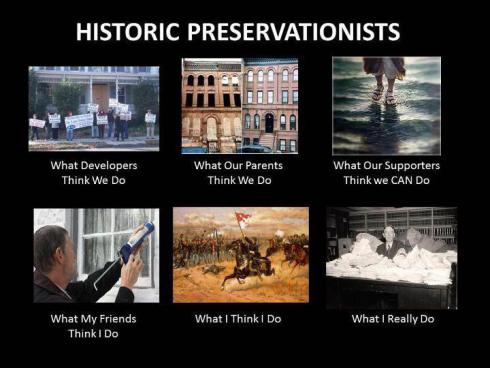
Historians serve as stewards of the past, disseminating history to a variety of different publics. However, segments of that public view historians and preservationists as obstacles–individuals who set up barriers, keep research confined within the academy, or prevent progress. Despite our efforts, this is how they perceive the work of history professionals.  Of course, those of us who work in the field know that history professionals are working to broaden outreach in museums (albeit with increasingly limited budgets), to spread literature and research, and to present a more open and accessible past by saving places across the country.

hpwhatwedo
Credit: Peabody’s Lament

This past week I staffed the National Preservation Conference in Indianapolis. While I didn’t get a chance to fully attend sessions, I observed a discipline actively working to remove barriers. Sessions sought to think past restrictions and standards and focused on aligning the needs of preservationists with the needs of community.

Continue reading “What We Really Do: Changing Perceptions”

Putting the Puzzle Together: Reflections on Travel in Seattle

Cross posted at PreservationNation.


Dale Chihuly Gardens of Glass Exhibition.

A metaphor I often use when talking about the past is that of a puzzle. Getting to know the whole picture of place means fitting together a number of disparate pieces that when snapped together give you a single picture — a snapshot in time that is one in a series that make up the past.

I also approach visiting new cities through this lens. A few weeks ago as a prelude to my visit to Spokane for the National Preservation Conference, I went to Seattle to visit with some friends and family. What I ended up doing was not just visiting to a popular tourist destination but also getting a sense of the place itself.

Continue reading “Putting the Puzzle Together: Reflections on Travel in Seattle”

Finding Preservation and Accessible History at the 2012 Webby Awards

Re-posted from blog.preservationnation.org

Everyone’s heard of the Grammys, the Oscars, and the Emmys. But last night was an awards show of a different kind. The 2012 Webby Awards, held at Manhattan’s historic Hammerstein Ballroom, celebrated people, companies, and organizations that have done something especially intriguing, impactful, and engaging online.

Continue reading “Finding Preservation and Accessible History at the 2012 Webby Awards”

Downton Abbey and the Pull of Place in Popular Television

I’ve been angling for a reason to write about Downton Abbey on this blog, and an opportunity presented itself in this fun Friday post that went up today on the PreservationNation.org blog. You can read the post with the awesome-as-usual Downton Abbey images here but I’ve also included the text below.

PS: I also use it as an excuse to mention other awesome shows like The West Wing, LOST, Dr. Who, and Battlestar Galactica. Because what would each of these shows be without the familiar hallways of the White House, the forests of our favorite Island, and a spaceship serving as home for a drifting civilization (or in the case of Dr. Who, the ability to hop from place to place in time)?

Downton Abbey and the Pull of Place in Popular Television


I think by now many of the regular readers on this blog know three things about me. I love history. I love writing about history. And I pretty much think about history, and place, and the past about 367 million times a day.

So it shouldn’t be a surprise that I think about the power of place and the past when doing the most mundane things — walking, cooking, and watching television.

Like many, many people, I’ve been enamored with the British period drama Downton Abbey, which just finished its second season run on PBS. For those that haven’t seen it, it begins in pre-World War I England and gives viewers a glimpse into the aristocratic Crawley family and their servants through the intervening years.

What I love about Downton Abbey is that the story centers around the estate, a magnificent house full of both grand (for the lords and ladies) and humble (for the staff) public and private spaces that serves as a mechanism for how a family and their employees lived in the early 20th century. The way the building is used over the two seasons reflects society and class as changes in women’s roles, war, and disease take its toll. But Downton is used as more than a set piece. The home is a crucial character in itself, and plays a crucial role for how each of the characters defines themselves.

This isn’t necessarily something new. After all, the whole premise of the show Cheers is to tell the story of a group of bar patrons in a particular space. Then there are three of my favorites — The West Wing, LOST, and (nerd alert) Battlestar Galactica — which are incredibly place-centric, as ninety percent of each episode occurs within their respective main locations: The White House, an island, or a giant spaceship that serves as the only defender against the enemies of humanity (try saying that three times fast).

What other shows out there use place to tell their story? We know of course that there are plenty of serials and sitcoms that use cities as the backdrop to their storylines. The stories in Mad Men, for example, are integrally tied to their place in mid-century New York.

The point, perhaps, that I am trying to make is that as a preservationist and a historian, I’m drawn to shows that integrate where they are with the people whose lives intersect in those spaces. And it’s the same for the real world, since the places we save are often inherently important because of the mark of individuals or groups on them, or our own modern interactions or associations with them.

I recently watched an episode of Dr. Who (a show with a time-traveling theme) where the main character presents a theory that there are fixed points in time that can never change — that events will always happen in this time and this place no matter what tries to influence them. It’s a fanciful idea, one that appeals to me as a historian because of how we think about the “power of place” — that an important way that we can tell the story of our past and make it tangible is by recognizing the confluence of people, places, and events in time.

What do you think? Do you love a television show because it reminds you of history, place, or preservation? Sound off below!

Preservation and a Pressure Cooker (A Reflection on the Materiality of Preservation)

The materiality of preservation is very much rooted in these places and objects ability to tell a story – to evoke the intangible in such a way that makes it more certain, more reliable, more real.

For work this week I wrote a piece reflecting on the stuff of preservation. I also managed to loop in a paper I wrote during my undergraduate coursework about a pressure cooker. Trust me, it makes sense.

I’m working on a few ideas for end of the year posts. So stay tuned!

~~~

I also wanted also wanted to point out to any Baltimorians who might be reading my blog that there is an Unconference going on in Baltimore today. You can see what they’re talking about here and on Twitter #bmorehistoric.

Flinging Ourselves into the Unknown: The Preservation Lesson of Buffalo

Delay. Delay. Delay. I’m going to be honest—this post has been a challenge to conceive and write. Not because I had nothing to say, but because I didn’t know how to frame my lessons from the 2011 National Preservation Conference. Much of this has to do with the fact that I wasn’t able to see the closing plenary—which serves not only as an end cap to a week of knowledge sharing, and networking, but as a launching point for where we are going.

Thankfully, that changed with the magic of the internet. First, the usual acknowledgement: I wasn’t a normal attendee of the conference. My daily job was to serve as conference staff—sitting in on sessions, passing out evaluations, taking tickets, which meant that with the exception of a session or two (and the major plenaries) what I saw and heard was often confined to the room in which I was assigned (or the Twitterverse), but what I did hear and learn afforded a glimpse into the future.

In closing her speech (and the conference), Isabel Wilkerson, author of a book about the migration of African Americans from Jim Crow South, quoted Richard Wright re his decision to migrate to New York City.

“I was leaving the South
to fling myself into the unknown . . .
I was taking a part of the South
to transplant in alien soil,
to see if it could grow differently,
if it could drink of new and cool rains,
bend in strange winds,
respond to the warmth of other suns
and, perhaps, to bloom”

This may be an awkward analogy but preservation is, has been, migrating. In the last ten years alone, the way we do business, the way we interact with others has changed dramatically. And it all started by sticking our toe, and in some places, jumping right headlong, into the unknown. We’ve seen how important our work is in regards to community development, we’ve stepped up about the importance of character, and how where we live, how we live, and why we live there matters. We’ve also spoken out about the importance of existing buildings in the sustainability movement. We are getting involved, making partners in ways that those outside the movement don’t expect.

But we are a reflection of events in the larger, broader world—where we as a country, as a global system have to re-think the way we’ve always done business or else run ourselves into the ground. We have to change the way we live in order to survive. Everything will not just work out “in the long run.”

That’s a pretty awful phrase, “the long run.” Often a justification to keep doing things the way they’ve always been done, because in “the long run” everything will work out the way it was meant to. It isn’t a phrase we can depend on anymore. As preservationists—heck, as historians—we have the ability to see where we’ve been and embrace change—bucking perception of our work. This conference showed me this. That all around this country there are preservation professionals taking risks, and finding new ways to meet the challenges of the coming years. So perhaps that is the biggest preservation lesson of Buffalo—that change is going to come, whether we want it to or not—but that we as a movement are prepared to meet it, to take our ethic, and transplant it in new directions, to cultivate it to respond to the the warmth of other suns…and bloom.
~~~

There are a few ways to catch some of the sessions from this National Preservation Conference. Visit www.preservationnation.org/conference for more information.

Awestruck, Inspired, and in #buffalove

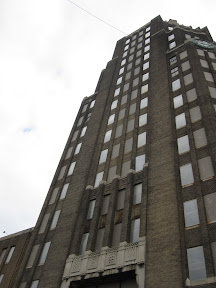
The tower at Central Terminal in Buffalo, NY

Update 11/3/11: The full documentary is now online!

Have you ever been somewhere where it was clear that the residents had so much pride in where they lived that they defied expectations? Next time you are in New York, forget the Big Apple and head North to Buffalo and you’ll see how this city has wiped away the illusions of the so-called rust belt and are actively rebuilding and investing in the future rather that allowing others to write them off.

Nothing says this more than Buffalo Unscripted, a documentary by the National Trust for Historic Preservation (yes, my employers). Earlier this year three of my co-workers went up to Buffalo and interviewed over 500 people about the city in which they live. The result is an hour long documentary that not only pulled at my heartstrings, but also made me see possibilities where I might have previously dismissed it.

The power of place is a phrase embraced by public historians. It reveals how much of our shared past is connected to where we live, where we interact, and and where we dream. For ordinary Americans it is not the site of major monument or a historic house, it is our neighborhoods, our churches and temples, our restaurants, and our homes. The power of place is the grit and the polish of an urban and rural setting; or the civic parks and landscapes where we meet. The power of place is in its community.

Two weeks ago I was in Buffalo for the National Preservation Conference and got to attend the premiere of Buffalo Unscripted. For months I had been hearing about the beautiful buildings, the enterprising people and was excited to cap off my visit in a theatre full of Buffalonians listening to how important their city was to them.

It is easy to be proud of a place like New York City, which in the media and the world’s eye exudes cool. It’s the same for cities like Chicago, DC, Dallas, San Francisco which have a reputation based on a particular image and idea of the cities personality. For places “in decline” it’s an uphill battle. How do you hold on to that pride when others put you down? How do you encourage investment when no one is able to see the promise? I say you do it Buffalo style and paint your own picture of growth, your own vision of rejuvenation, and invest in yourselves in a way that that takes the cultural capital of the past and leverages into a very real future.

The people of Buffalo are saving their historic buildings, rewriting their zoning code, and rebuilding their neighborhoods one school at a time.

Through Buffalo Unscripted I found myself encouraged by those who have made their lives and homes in a changing city. For them, where they live isn’t limited to a single building or block, rather it is about making a dream reality for an entire city. The power of place is in Buffalo’s people.

For more information about Buffalo Unscripted visit www.buffalounscripted.org, or follow hashtag #bufunscripted on twitter. The full documentary will be online soon, until then enjoy this clip about “Buffalo in one word.”

Buffalo In One Word: Authentic from PreservationNation on Vimeo.

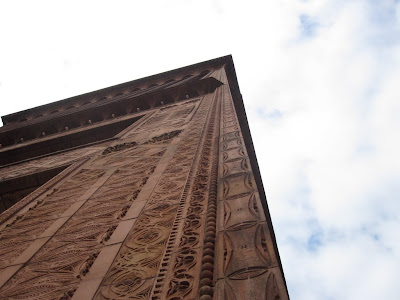
I am in #buffalove, and want to emphasize that if I could marry a building it would probably be the Guaranty Building.

You can view the rest of my pics here, and keep an eye out for more on the National Preservation Conference next week!

Bring it on Buffalo

It is October! Which means I have been spending a full week here in Buffalo, NY for the National Preservation Conference. Last night I made a decision that instead of trying to write a bunch of posts for each day I would wait until I came home to share my thoughts. It will be a little bit more focused with less summary and more interpretation/reflective than I usually do. So stay tuned!

In the meantime you can follow along with the events in a variety of ways online.

Live Streamed Sessions: www.preservationnation.org/conference
Twitter: #presconf, or follow just me (but where is the fun in that) at @pc_presnation
Flickr: Preservation Nation Flickr stream
Blog: Preservation Nation blog.
Facebook: National Trust Facebook page

And check back here next week for more observation and thoughts.

Preservation in Pop Culture: How I Met Your Mother

As I mention in the description of …and this is what comes next (and perhaps as can be evidenced by my inordinate love of the television show LOST) I am both a historian and a pop culture fanatic. This year one of my favorite shows, How I Met Your Mother had a long running story line about an old hotel and one woman’s fight to save it. There are lots of hijinks along the way, but in the end the way the storyline portrayed preservation wasn’t pretty.

In response, my friend Will (who works at the Preservation Alliance of Minnesota) and I wrote this blog post over at the PreservationNation blog where we talked about the plot line and what it says about preservation in pop culture.

Check it out and let me know what you think!

Landscape & “Look at what you see, and then see beyond that”

So I’m actually writing this blog from the middle of the social media session (have you been following us on #presconf this week?) but I’ll save that conversation for the wrap up post on Sunday/Monday.

Yesterday was the day for “Next American Landscape” and we started again with a large general session to frame out the day. Panelists included John Bullard (Mayor of New Bedford former Mayor of New Bedford and director of  Sea Education Association) who has a different view on the role of preservation and environmentalism (especially in the case of Cape Wind), Preservation magazine editor James Schwartz and Director of our Southern Field Office Rob Nieweg. Bullard asked two questions: What’s going on here & What are we going to do about it?

The Cape Wind issue is large, complex and hard to explain in brief—so I ‘ll just send you here for more information but Bullard’s essential point is this: with the parts per million of carbon emissions higher then it has ever been, we cannot afford to not put up renewable energy resources as quickly as possible, because if we do not, everything else won’t matter. We can fight for old buildings and historic sites, but what good will that do us if we’re all suffering the effects of global warming.

He also says that while everyone was focusing on the visible intrusion of the windmills, they are ignoring the other terrible things going on in Nantucket (heavy boat traffic, sewage dumping etc.)

In the same vein Nieweg talked about the fight against high powered transmission lines through the Journey through Hallowed Ground. Some of which rely on coal plants and become “industrial intrusions on the landscape”

Both of them are asking us to think about the relationship between power, the landscape, and the preservation of our historic past. At one point Niewig asked “Do we want to sacrifice landscape for cheap power?”

These are the tough questions right? On the Next American City day a lot of the conversation was about finding balance, and looking at ways to bring sustainable design into adaptive re-use buildings, here we are talking about the same thing—but from the opposite angle, where environmentalism clashes with the tenants of historic preservation (saving viewsheds and shaped land).

It was a thought provoking session that once again stayed on my mind throughout the rest of the day—and what I found through my three sessions (Nominating Large Cultural Landscapes to the National Register, Land Conversation and Ranching, and a fantastic session on culinary agritourism in Washington State) is the need to ask those tough questions and find creative solutions because dealing with landscapes is a lot harder than dealing with a physical structure.

In the first session of the morning (the breakout on Nominating Large Cultural Landscapes) we saw that very complexity in identifying and discerning the different pieces of a a historic landscape (structures, layers of history, changes to the land). Unlike a building or a neighborhood with finite boundaries, a landscape has no start or no end, and often has multiple owners (some public, others private). The second session gave two case studies in Colorado. At one point one of the panelists mentioned that the driving force to doing the ranching survey projects was the fact that developmental threat (I think the Army was going to use the land for exercises) stated that the space was perfect because “there was nothing there.”

My third session, was about the world of agritourism. I first learned about the role of food in telling stories about a place and the past during my undergrad at William & Mary—and it is also the idea that pulled me down the rabbit whole hole into looking at history and culture writ large. That is telling the story of a space through music, film, art and food. So this session looked at the land and the landscape of farming and turned it into a central part of Washington State Tourism.

So how does this link to the general session this morning? I think that it has to do with looking at the big picture taking a deep breath, and trying to figure out a new way of doing business. In Thursday’s general session they talked about changing the rules—and for the real world maybe that’s what is on the horizon.

~~~

Later on yesterday night I attended the National Preservation Awards at gorgeous Paramount Theatre. You can see the winners on www.preservationnation.org but the videos are the real star and will be rolled out on the web in the next few weeks. From Main Street Iowa, a school in Las Vegas, and the 2010 Crowninshield winner Tony Goldman it was a night of pride. I think some of you will be interested in seeing all the work he has done in Philadelphia, New York and Miami. During his acceptance speech he said his one advice for preservation is to take a look at what you see before you, and then to look beyond that to a broader, complete vision.  Words to live by.

Check out pictures here.

We’re packing up now, and I’ll be on my way to DC in a few hours. In the wrap up post next week I’ll talk about the last session I attended, the Forum Lunch and put a few final thoughts down for closure.