It’s been a busy summer. I’ve ended up having a lot more vacations then expected (which is great) and not enough time to work on some upgrades to the blog that I wanted (which is not so great). I did however manage to purchase a domain name so this blog is now thisiswhatcomesnext.com. Other changes should come in early fall.
This month’s Hodge Podge is what its always been. A collection of thoughts. A sense of appreciation. A tribute. It’s also a bit random with no clear connective tissue beyond the history and links to storytelling. I end this post with a collection of links because when I haven’t been writing here I have been writing for PreservationNation.org, Fangirl, and Homespun.
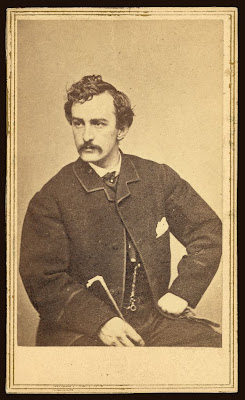
A common image of John Wilkes Booth, Lincoln’s Assassin. From the Library of Congress collection.
For a long time I have devoted my energies, my time and money, to the accomplishment of a certain end. I have been disappointed. The moment has arrived when I must change my plans. Many will blame me for what I am about to do, but posterity, I am sure, will justify me. Men who love their country better than gold and life.
–John W. Booth, Payne, Herold, Atzerodt
When we think of history it is linear. One event follows the next tripping forward, action precipitating reaction. And so when the line loops around it provides a sense of historical congruence, a symmetry of understanding that while obvious, feels like puzzle pieces dropping into place.
In an article between the Civil War Trust and James Percoco (one that includes some great images of him in action), my high school history teacher, stated “I think what will serve as my legacy is the numbers of young people who found their calling for life through their experiences in my classroom. The American historian, journalist, and educator Henry Adams once wrote, ‘A teacher effects eternity, he can never tell where his influence stops.’ ”
At his retirement party yesterday that influence was self-evident as former students (including me), family members, and colleagues stood up to talk about his accomplishments.
I know I’ve talked about Jim’s influence on my love of history (last year in a piece on the day of his induction into the National Teacher’s Hall of Fame) , and so I thought I would reflect on Percoco’s remarks at the gathering last night.
Everyone’s heard of the Grammys, the Oscars, and the Emmys. But last night was an awards show of a different kind. The 2012 Webby Awards, held at Manhattan’s historic Hammerstein Ballroom, celebrated people, companies, and organizations that have done something especially intriguing, impactful, and engaging online.
Many of my posts on this blog are often connected more often than not to my thoughts about the past through books, movies, exhibits, and travel. Seeing the reflection of the past in the “stuff” we consume, produce, and leave behind.
However, sometimes I like to look past the “why” and to the “how,” to the practice of public historians — what we do well, what we should be doing, and how I can engage in this broader conversation.
This year’s annual conference for the National Council on Public History involved a convergence and a merging of ideas with the Organization of American Historians. As expected the five days in Wisconsin were filled with networking and sessions which integrated your typical academic style paper(s) with the more hands on, interpretive style of the public historian presentations.
So I thought that I would use this, my first of three [the second will come in a few days, the third on food will post in June] posts on my trips to talk about methodology — providing examples of different (or not so different) conversations through the lens of the meetings and sessions I attended.
Earlier yesterday, this post went up on the PreservationNation.org blog.
In the next two weeks I will find myself in Milwaukee, WI (where I am right now) and Ft. Worth Texas. Both trips are professional in focus, the first for my annual pilgrimage to a new US city for the National Council on Public History. This is a conference that every year introduces me to new people and new conversations.
Mentally, the historian in me battles with my inner foodie and urbanist. I’ll spend an inordinate amount of time trying to figure out what to see, what to eat, and what makes these cities tick.
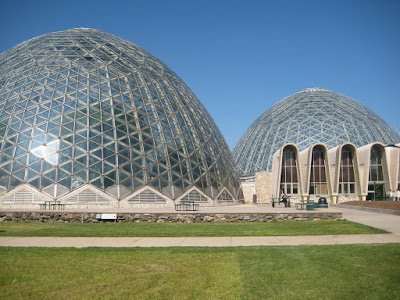
We hit the ground running here in Milwaukee. Not only did I get to stay at the historic Ambassador Hotel the first night, I also got to visit the Domes, three modernist greenhouses that are a part of the Marshall Park Conservatory. If you think the exterior looks cool, check out the inside….the three domes had flowers and plants from a tropical ecosystem, a desert ecosystem, and the final one, which demonstrated the human effect on landscapes and flowers.
Then we had the second annual THATCamp NCPH. If you remember from last year this is an unconference, an informal learning experience having to do with digital and new media in the humanities. The sessions I attended had to do with the future of blogging, the issues surrounding bringing scholarly publications to the digital realm, and a closer examination of branding and promotion for organizations and projects. I walked away, as usual, with a plethora of really cool websites and links.
I’m hoping to do a more analytical post about content at the end of the conference but I wanted to emphasize my goal for the next two weeks as I experience Milwaukee and travel to Texas:
I’m feeling the pull — that urge to make sure that I don’t miss a minute, a site, or a story, and to walk away from both these places seeing them as more than just a meeting room space.
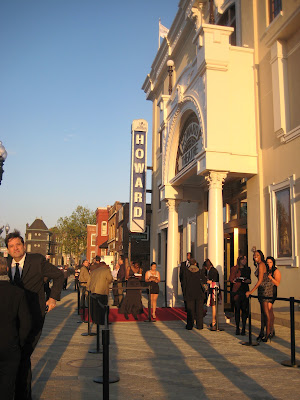
The Marquee of the Howard Theatre Credit: Priya Chhaya
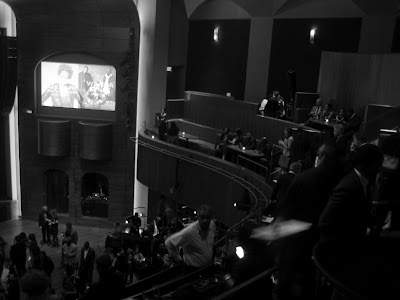
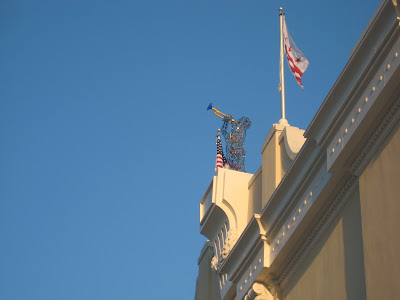
Just a quick post to share some pictures I took at the Howard Theatre (link to info on the restoration) re-opening this week. If you want to read a great account of the night, that included performances by Trombone Shorty and George Clinton check out this post at PreservationNation — complete with great interior shots that my basic digital camera could not take successfully.
As you can tell from my previous post I love the theatre/theater, and while I often talk about the plays, movies, or performances that occur inside these buildings, these performances are enhanced by the places where they occur. Ambiance, acoustics are often what takes a concert to the next level.
One of the places I saw the Hunger Games was in the Uptown Theater in Cleveland Park, DC. It’s an old, one screen theater–complete with a balcony. While the movie was the same (I had seen it a few days earlier) there was a sense of grandeur in seeing it again, something that you sometimes miss out at the cookie cutter, stadium seating theaters.
So when an old theatre or theater is rehabbed and brought back to life it’s a wonderful thing. Often these spaces are transformed from original use, but as was the case with the Howard Theatre there is still that origin story of its original place in the community. In this case the memories of performances by musicians of the present and days gone by are about to be added to by a new generation with performances by Savion Glover, Wanda Sykes, James Brown, the Roots and the like.
This is perhaps a post more about narrative than anything else. As I work on another story for May I am ruminating on how to pull together disparate pieces into something coherent and meaningful. And so for this post I thought I would take a look at methods of storytelling in film and theatre. Specifically, the role of the fourth wall in narrative.
The first is a look at the recent book turned into film The Hunger Games, followed by a reflection of a recent adaptation of Eugene O’Niell’s Strange Interlude at the Shakespeare Theatre in DC. Finally, I wanted to look at the role of participant theatre through my experience at the creepy, yet satisfying production, Sleep No More, a version ofWilliam Shakespeare’s Macbeth.
The Hunger Games
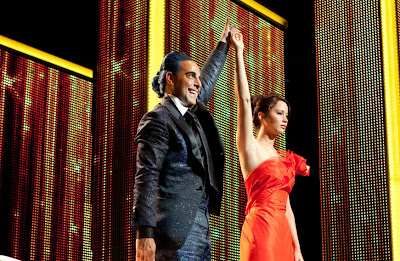
Caesar Flickerman (Stanley Tucci) and Katniss Everdeen (Jennifer Lawrence) in THE HUNGER GAMES. Photo credit: Murray Close (www.thehungergamesmovie.com/?section=photos&item=13)
A story about a world controlled by violence where children are held hostage to a Capitol determined to hold society under their thumbs through an annual gladiator style rite called the Hunger Games. By now, most of you know about this series, andthere isn’t much I cansay about this book that hasn’t already been addressed by others….
Do I recognize the stories precedents in classics such as the Lottery and to some extent Lord of the Flies (and, yes, Battle Royale) Check.
Do I see in the narrative a reflection of our obsessions with 24 hour news, and reality television? Check.
From a storytelling angle, I have to approach the book and the movie separately. The book looks to tell the story from one point of view. We only see and learn what Katniss understands, we know what she knows. It’s like looking at the history of a town or a place and using one person’s diary to tell the tale, sans broader political or social context. We know she is only a piece in a larger machine, but we don’t know what role she plays until later.
In the movie, this tale is approached from two or three different perspectives. We still have Katniss’ point of view—primarily in the arena, but we are also given information as a part of the viewing audience along with glimpses of the undercurrent of malevolence by President Snow and company. And here is where the fourth wall comes in (props to my friend Rob for bringing this up). In the film adaptation we’re pulled into the film primarily through the use of the “hand held (shaky) camera.” The fight scenes feel un-choreographed – and we are amidst the chaos, grappling for some purchase and an upper hand.
The fourth wall is a theatrical term that refers to the barrier between the audience and the events on the screen or stage. “Breaking through the fourth wall,” is when that audience is acknowledged directly, no longer invisible. While the Hunger Games film never directly acknowledges our presence, I did feel at times that the camera work, and the “reality” based storyline made us more than just an unwitting audience member – and made you think of how complicit we are, in our world, of feeding the unreality of reality television.
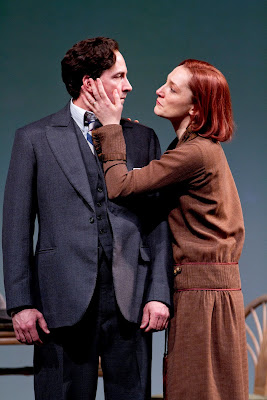
The story starts with a man talking about his daughter, Nina. Her fiancé has recently passed amidst the fighting of World War I, and her father worries that she will never rise up from her grief and sorrow.
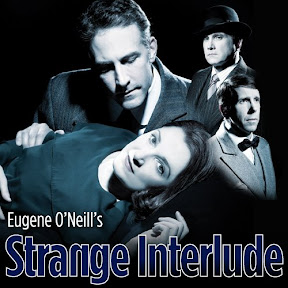
Over the next 3 hours and 45 minutes (a shorter version of play that is normally almost over 4 hours, and often includes a dinner break) viewers are treated with a strange tale. One of grief, manipulation, love (can you call it love?) and expectation. This is Strange Interlude.
I’ll be honest, when we first heard how long it was my friends and I made an unofficial pact (one we probably would never have gone through with, because we aren’t really like that): if we hated the show we would bail during the first intermission.
Luckily that was never necessary. It’s hard to describe Nina Leeds. On one hand she is held up as someone who will not do what is expected, refusing to listen to her father or to an old family friend until pushed. On the other, she and most of the males in her life believe that happiness comes with marriage and children, a daunting task for someone who lives her life for her lost love. When she finally does wed, she discovers a hidden secret in her husband’s family that forces her to live her life dedicated to putting someone else’s happiness above her own.
I don’t want to give away the story (especially for those who may consider attending this show), but I wanted to look at two specific elements. In terms of set it’s a blank canvas. Three pale walls that take up only half of the stage at the Harmon Center for the Arts (the rest of the stage is dark). During scene breaks, scenes of the time/mood/tension are flashed on these walls through black and white silent films.
Much of what we learn about motivations and feeling come from regular asides from each of the main characters. An aside, for those who aren’t familiar with the term, is when a character steps out of the normal conversational dialogue to add….an aside, something only we can hear, but none of the other principal actors can. In Strange Interlude we glean sincerity and a version of reality (as each of them see it). Not quite the fourth wall, but certainly insight that we would not get if this was written as a straightforward play.
Don’t want to take my word for it? Let others sway you, and then go see it yourself. (If I didn’t mention it before, this is also a comedy).
Sleep No More
MACBETH.
She should have died hereafter;
There would have been a time for such a word. —
To-morrow, and to-morrow, and to-morrow,
Creeps in this petty pace from day to day,
To the last syllable of recorded time;
And all our yesterdays have lighted fools
The way to dusty death. Out, out, brief candle!
Life’s but a walking shadow; a poor player,
That struts and frets his hour upon the stage,
And then is heard no more: it is a tale
Told by an idiot, full of sound and fury,
Signifying nothing.
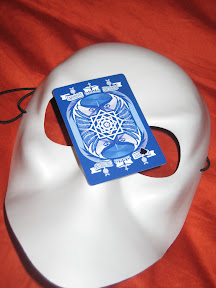
Mask and Ticket for Sleep No More Credit: Priya Chhaya
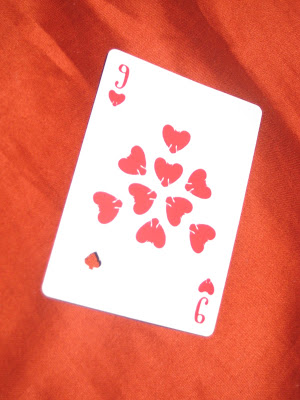
Picture this. You check in your bags, and receive your ticket – a playing card that leads you up some stairs and through a narrow dark passageway that transports you from there (Chelsea, New York City, New York) to here. You are told it is a hotel…the McKittrick Hotel, but it is also a speakeasy where suited up guides use breaks in the music to call out numbers for the much larger show. This is how we are herded, prepared for what is to come.
You get a mask, reminiscent of the masks from V for Vendetta but much more ghoulish, and are told to stop speaking. No cell phones. No outside communication at all. After all you are no longer there…you are here.
And up, up, we go and step beyond the realm of typical theatrics and into the show itself.
Have you ever watched a play and wondered what it would be like to walk on set, walk through doorways, and wander about fake libraries, dining rooms or battlefields? In the McKittrick that is what we get to do. On one floor we are wandering through a graveyard. Small crosses dotting a hallway that is nearly pitchblack. I can smell the dirt, and hear the sorrow. The graveyard turns into ruins, half built brick walls, with a statue of Jesus (or was it an angel?) raising their arms towards us. (Aside: This would have seemed less menacing had I not recently seen the “Don’t Blink” episodes of Dr. Who.) It’s a maze that ends in a wall of glass doorways, and peering through the frosted glass you are given a glimpse of a bedroom filled with other silent, masked attendees.
We walked through the glass and spotted the white, porcelain tub in the center of the room. Papers lay scattered about, and when you pick it up you see a familiar name. Macbeth, writing to his lady love.
And then, he walks in followed later by his wife – and though they never verbalize the conversation we figure out that this is the moment. When she convinces him that regicide is what he must do to achieve the throne.
Then we have a choice. To stay with the Lady, or to follow him as he runs to his fate. We stay, others go. We wait, knowing that when Macbeth returns he will have hands stained with blood. And so he does.
We are a part of the play. We are the silent observers to the madness. It is truly like stepping in, almost like a voyeur, into the play itself. The actors never really acknowledge our presence, but they react, dance and float. They fight and we are moved along with the motion, physically working to find out what comes next.
~~~
If anything comes close to truly breaking the fourth wall, this production by Punchdrunk (who champions this type of immersive theatre) does. In this play, Sleep No More, “Lines between space, performer and spectator are constantly shifting. Audiences are invited to rediscover the childlike excitement and anticipation of exploring the unknown and experience a real sense of adventure.” (www.sleepnomorenyc.com). The sets are meticulous, and successfully provide visitors with the opportunity to investigate, opening books, touching tables and wandering.
It is, however, not for the faint of heart. While I explored as much as possible, the silence is unnerving, at times frightening (especially when you are on the upper floor filled with signs of growing insanity by the inhabitants), and I was grateful to have my sister standing next to me.
Like Strange Interlude and The Hunger Games the fourth wall still exists, but it is transparent. While we cannot affect the outcome of the show, we are a part of it, and though you do not need to know the story of Macbeth, it helps to make connections and to understand motivations.
At the end of the night as we stepped from here to there—back into Chelsea, New York City, New York, and reality once again.
Sleep No More is currently being shown through the end of June 2012. For more information visit www.sleepnomorenyc.org.
From time to time, I like to put in my two cents on exhibitions I have seen. However, like any museum goer I bring of baggage: expectations, assumptions. This coupled with my understanding of narrative and story effects what I see presented—especially when it comes to how objects and technology are used to tell a story. In the last two months I’ve seen two museums and two exhibitions: the Newseum, the International Spy Museum, the New York Public Library, and the Ralls Collection in Georgetown.
The History of the News
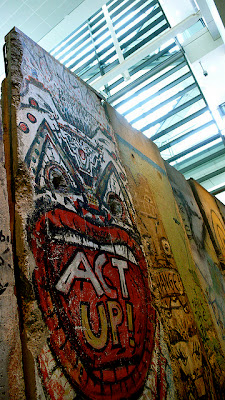
The Berlin Wall @ the Newseum By paloma.cl on Flickr
Here in DC we are spoiled. The Smithsonian Institution allows us free access to some excellent exhibitions, art and performances. Consequently it takes a lot of convincing for me to pay for a museum, especially one seemingly as large as the Newseum. The traditional adult ticket price for the museum is a $20 pass that will let you in the museum for two days. It is a price clearly meant for tourists, and implies that there are enough activities and exhibits to fill two days at the museum. (Though it feels a little bit unrealistic because if I only had a few days in a particular city I wouldn’t want to go back to the same museum two days in a row). A few months ago a Groupon came up essentially cutting the cost of the museum in half, and so off I went.
The mission of the Newseum is to “educate the public about the value of a free press in a free society and tell the stories of the world’s important events in unique and engaging ways.” And it does. In seven floors the museum addresses the history of the press (from newspapers to radio to television), to the press during pivotal moments of history, such as the fall of the Berlin Wall. It also deals with the first amendment to the Constitution, highlighting its importance in American history.
We went through the museum in about four hours, spending more time in the main gallery with its original books and newspapers showing the progression in headlines and type. While I did appreciate this gallery, I’ve heard that when the museum gets crowded it’s impossible to actually spend any actual time in this space.
They also have a section of the museum dedicated to the tragedy of 9/11. Headlines and broadcast reports document that day. When the ten year anniversary happened a few months ago I realized that I wasn’t quite ready for it, and chose to avoid the documentaries and discussions that evaluated our live since the attack. In this gallery I felt much the same way. My friend and I talked about where we were when it happened, and how vivid some of the details still are. It’s pretty powerful to see everything pulled together in one space, a reminder (as if we need it) of just how insane everything was.
The thing the Newseum does well is to look at current events to show the place of free speech in society. If anything its array of daily newspapers emphasizes the differences in this country, but also, very much highlights some of our similarities. It’s true that good, credible, news tries to be unbiased, but each is reflective of a certain subtle direction – and you can see that by a brief scan of headlines from each state in the country. I also appreciated how the Newseum made the connections between communication platforms from a century ago, to the different ways that we get news today.
I’m not sure if I would recommend paying full price, but if you do have time on your hands and want to see some interesting artifacts by all means go.
Going Undercover
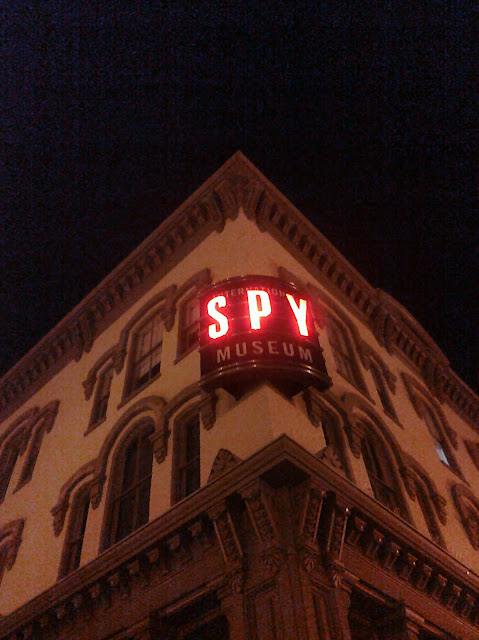
The outside of The Spy Museum in Washington, DC at night. Credit: Sean Rooks on Picasa
My next museum was another half off deal to the International Spy Museum. I will readily admit that I walked into the museum not knowing what to expect, and like the Newseum expected it to be a bit flashy, after all a museum about spies should be all about the spy experience.
When we first got there we were ushered into elevators that took us to the top floor where we were told to memorize an identity in five minutes. It reminded me, on some level, of visiting the Holocaust Museum, where we left the airy lobby space and entered the dank, din horror of the permanent exhibition (via elevator), complete with our own identity cards….but designed to be like a game rather than to put yourself in someone else’s shoes.
In the Spy Museum we were then sent into an orientation video that walks you through the different faces of being a spy, or a double agent even going so far as to chronicle famous spies and traitors to the United States.
The next stop was outfitting, where were told how to do a dead drop, provide signals, disguise ourselves. We even got to crawl through “ductwork” while listening to bugs placed elsewhere in the exhibition….and that’s where things got less interesting.
I’m not saying that the history of spies through the years wasn’t well done – it just didn’t feel engaging or as dynamic as it is touted to be. The set up is a little confusing, and at times as we hopped from time period to time period, I lost the thread of the over arching narrative for the museum.
And those identities? We were told that we would be quizzed about them—but my friend and I only saw the testing at the end, and we walked away thinking that we had missed some crucial piece along the way. (It was a few questions designed to see if you can travel through customs without arousing suspicion.)
I think I may have expected too much, and instead of seeing through the hype was disappointed when I wasn’t “wowed.”
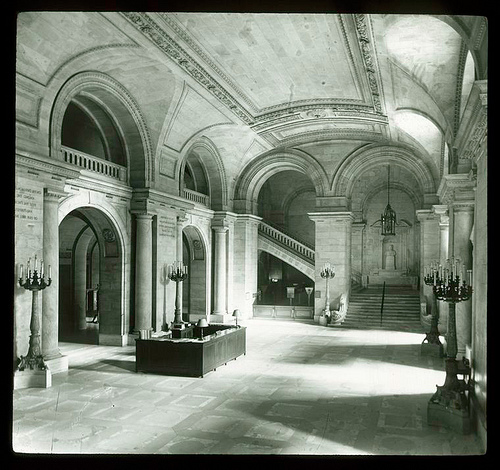
New York Public Library's Main Inquiry Desk (c.1923). Image from the NYPL Flickr Stream.
A Centennial
I’ve often heard that the architecture of the New York Public Library at Bryant Park is a must-see for visitors to the city. So when I had a chance to visit a few weeks ago, I decided to go. It is a beautiful building. Great arches, stonework, what you feel a library should look like. Though there wasn’t time to go through the reading rooms, I did walk through the centennial exhibition “Celebrating 100 Years.”
Not a large exhibition, but it was a very effective one. Dividing the room into Observation, Contemplation, Creativity & Society the objects and books reflect documents of discovery, religion, imagination/fiction, and political/social history. Music scores, Charles Dickens’s letter opener, engravings all pull together a bigger picture the written word.
One of the things I loved about the exhibition was how the architecture features of the building were used to enhance the exhibition. Pre-existing columns and archways mark the section breaks moving visitors in a smooth manner.
Coloring Outside the Lines
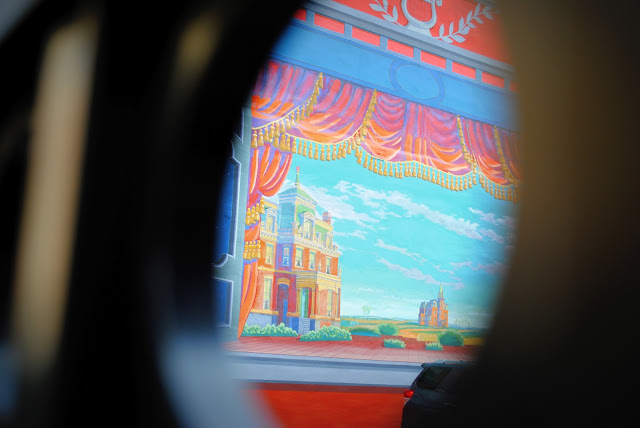
Copyright National Trust for Historic Preservation. The Toy Theatre mural opposite the Brewmaster's Castle in Dupont Circle.
Earlier in the month I found myself arrested by color in a mural that had gone up in Dupont Circle. It was fairly magnificent and reminded me of why I find myself in awe of individuals who can put together two seemingly disparate shades of color and make them “pop.”
And so a few days later I visited The Ralls Collection in Georgetown to attend a lecture by two artists about the effect of place (specifically, Japan, Korea, and India) on their work. Once again I found myself drawn into the color and the abstract nature of both of their work.
During their gallery talk, John Blee and David Richardson spoke about how their travels influenced the their color palette. Richardson spoke of how his Expatriate series reflects the reds, gray’s, and blacks of Seoul. That being said, neither individual’s work “screams” Asia, and that subtlety is what makes the paintings strong and imaginative.
Both artists are part of the exhibition “20 Years, 20 Artists at The Ralls Collection” which is filled with a wide array of fantastic pieces. What I loved about the talk was how passionate both artists were about the process, speaking candidly about how they got started, and how their art comes after the inspiration, but also from a place that is sometimes unexplainable.
~~
While this exhibition is different from the three others I described they each worked to tell a story using color, text, objects in an effective way. If you visit (or have visited) any of these exhibitions let me know what you think in the comments below!
I’ve been angling for a reason to write about Downton Abbey on this blog, and an opportunity presented itself in this fun Friday post that went up today on the PreservationNation.org blog. You can read the post with the awesome-as-usual Downton Abbey images here but I’ve also included the text below.
PS: I also use it as an excuse to mention other awesome shows like The West Wing, LOST, Dr. Who, and Battlestar Galactica. Because what would each of these shows be without the familiar hallways of the White House, the forests of our favorite Island, and a spaceship serving as home for a drifting civilization (or in the case of Dr. Who, the ability to hop from place to place in time)?
Downton Abbey and the Pull of Place in Popular Television
I think by now many of the regular readers on this blog know three things about me. I love history. I love writing about history. And I pretty much think about history, and place, and the past about 367 million times a day.
So it shouldn’t be a surprise that I think about the power of place and the past when doing the most mundane things — walking, cooking, and watching television.
Like many, many people, I’ve been enamored with the British period drama Downton Abbey, which just finished its second season run on PBS. For those that haven’t seen it, it begins in pre-World War I England and gives viewers a glimpse into the aristocratic Crawley family and their servants through the intervening years.
What I love about Downton Abbey is that the story centers around the estate, a magnificent house full of both grand (for the lords and ladies) and humble (for the staff) public and private spaces that serves as a mechanism for how a family and their employees lived in the early 20th century. The way the building is used over the two seasons reflects society and class as changes in women’s roles, war, and disease take its toll. But Downton is used as more than a set piece. The home is a crucial character in itself, and plays a crucial role for how each of the characters defines themselves.
This isn’t necessarily something new. After all, the whole premise of the show Cheers is to tell the story of a group of bar patrons in a particular space. Then there are three of my favorites — The West Wing, LOST, and (nerd alert) Battlestar Galactica — which are incredibly place-centric, as ninety percent of each episode occurs within their respective main locations: The White House, an island, or a giant spaceship that serves as the only defender against the enemies of humanity (try saying that three times fast).
What other shows out there use place to tell their story? We know of course that there are plenty of serials and sitcoms that use cities as the backdrop to their storylines. The stories in Mad Men, for example, are integrally tied to their place in mid-century New York.
The point, perhaps, that I am trying to make is that as a preservationist and a historian, I’m drawn to shows that integrate where they are with the people whose lives intersect in those spaces. And it’s the same for the real world, since the places we save are often inherently important because of the mark of individuals or groups on them, or our own modern interactions or associations with them.
I recently watched an episode of Dr. Who (a show with a time-traveling theme) where the main character presents a theory that there are fixed points in time that can never change — that events will always happen in this time and this place no matter what tries to influence them. It’s a fanciful idea, one that appeals to me as a historian because of how we think about the “power of place” — that an important way that we can tell the story of our past and make it tangible is by recognizing the confluence of people, places, and events in time.
What do you think? Do you love a television show because it reminds you of history, place, or preservation? Sound off below!


 Then we had the second annual THATCamp NCPH. If you remember from
 ...this is what comes next