Note from Priya: From time to time I like to open my blog up to friends who have had great experiences with public history. One of the most common ways that we connect with the past is through our family. Here is one story of making that connection.
By William Blake
When I was young, I asked my dad where I got my name from. He explained to me that I was not, in fact, named after the poet. I was named after my ninth-great-grandfather who left England and settled in Boston in the 1630s. His son, James, built a house in Dorchester, just outside the city, that still stands to this day. One year for Thanksgiving, my dad took me and my brother to Boston, where we had the chance to see the Blake House and visit a nearby cemetery containing Blakes from many generations ago.
My dad did not know much about the Blake family in England, but that didn’t bother me. For any young American interested in history, that is an amazing enough story. Many of my friends cannot trace their origins back more than one century. In the last year, I have discovered I can trace my origins back eight centuries, back to the days of Magna Carta. Along the way, I have found connections to a coat of arms, members of parliament, the poet (who is likely a 12th cousin), and a cousin nicknamed the “Father of the Royal Navy,” who is buried at Westminster Abbey.
When my then-fiancée suggested that we spend our honeymoon in England over Christmas, I couldn’t have been more thrilled. After we got married, I spent my summer studying for my grad school comprehensive exams. I broke up the monotony of studying by doing genealogical research (if you have not tried ancestry.com, you should!). I connected with a distant relative in Australia who has been researching the Blake family for years. He opened my eyes to a great deal of information about the early Blakes in England.
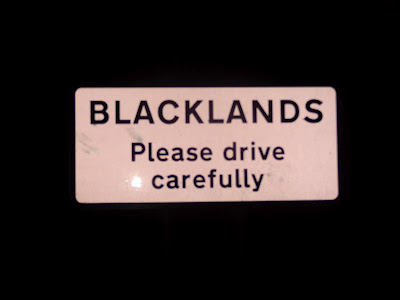
I now have a more precise answer as to where my name comes from. Blake is the old English word for black, and years ago I read speculation that the name was applied to an ancestor with black hair or dark skin. Surnames were often adopted to tell two people with the same first name apart. This was not the case with our family. About two hours west of London lies the county of Wiltshire. In 1194, Richard I established the parish of what is known today as Blacklands just outside the market town of Calne in Wiltshire. The parish contains only about 500 acres, and it name refers to the dark forest that once existed there.
The original name of the parish, however, was Blakeland (or Blakelonde). It was a common practice for Norman nobles to adopt surnames based on the location of land they owned – given to them by a Norman king. DNA tests of other Blake descendants reveal Norwegian markers, which could also indicate Norman ancestry. As far as I can tell (and this is a rough estimate), my 24th-great-grandfather was John de Blakeland, born ca. 1200.
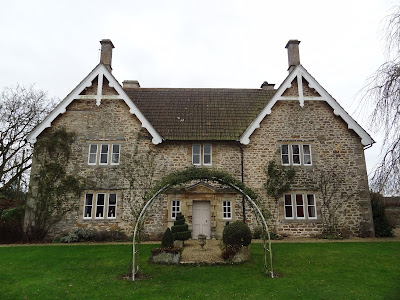
Just to the west of Blacklands is Pinhills Farm, a house that dates back to the mid-17th century. It was built, in part, out of materials from a much older manor house that was burned during the English Civil War. The old manor house is listed as the possession of one of Alfred the Great’s grandsons in the 10th century. The Blake family acquired Pinhills sometime in the 14th century and lived there for about four centuries. The Blake family supported Parliament during the Civil War, and Pinhills stood as a garrison for Cromwell’s forces in Wiltshire, and a moat was added to protect the manor. Unfortunately, that area of Wiltshire fell to Royalist forces on December 28, 1643, and Prince Rupert ordered Pinhills to be destroyed.
I was able to get in contact with the current residents of Pinhills Farm, and they graciously gave us permission to visit on our trip. On December 27, we rented a car and set off from London for Wiltshire. It was difficult restraining my excitement, but I had to in order to navigate the hazards of driving on the wrong side of the road. The English countryside was more beautiful than I could imagine, and I think could England could be described as the Emerald Isle just as easily as Ireland. We exited the highway, drove through the town of Calne, and onto Pinhills.
The family currently living at Pinhills could not have been kinder to us. They gave us an expert tour, allowed us to take plenty of photographs, and then invited us in for a proper English tea – complete with China and homemade cake. We had a nice chat about history and politics. Although we did not take pictures inside the house, I did have the chance to touch some very old ceiling beams, which likely were part of the materials salvaged from the original manor house. It was truly awe inspiring to have such a physical connection with a place that has so much history, especially so much history connected with my family.
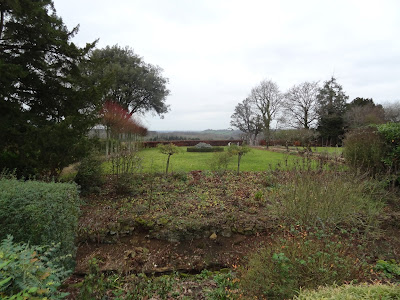
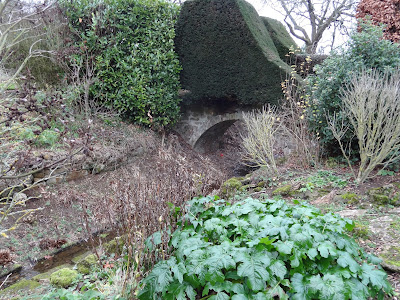
The grounds of Pinhills have been kept in immaculate condition, including the moat. When originally constructed, the moat was about 15 ft. deep. As a result of erosion, it is only about 5 ft. deep. The area inside the moat, where the original manor house once stood, has been converted into a beautiful garden. I felt such an incredible sense of inner peace being there. Our hosts pointed out one old tree under which George Prothero, an English historian, wrote one of his manuscripts. My reaction was that I would be so much happier to write my dissertation under that same tree than anywhere else on Earth.
As if the family connections on our trip could not get any more enjoyable, the next day we drove back to London and I went to Westminster Abbey. At first it looked like I was not going to be able to go in, as I arrived close to time from the last admission. I told a marshal that there are memorials to two of my cousins in the Abbey – the poet and Admiral Robert Blake. The marshal called her boss, the head marshal, and when he heard my name, I got VIP treatment. I was whisked inside without waiting in line or paying admission. I got to see parts of the Abbey usually out-of-bounds to tourists, which was a good thing because the memorial to Robert Blake is located just off the tourist route.
All-in-all it was a truly magical trip, but I already have a long list of genealogical and historical things I want to do on the next trip.
There is a moment when you settle into your seats at a movie theater where you leave your sense of realism behind. You know that what you are about to see is a construction. A piecing together of someone else’s vision based on a nugget of an idea. For movies based on history that suspension of belief depends on how much you trust the writers, directors and the story you are being presented.
It’s all about interpretation, right?
Sign on a Restaurant in Lancaster, OH (c. 1938) Credit: Ben Shahn, from the Library of Congress (www.loc.gov/pictures/item/fsa1997017528/PP/)
One of the blogs that I read on a regular basis is called Interpreting Slave Life, which talks about the craft of telling the story of slavery. It is a tough job, requiring nuanced approach and a lot of thought. How can an interpretative approach demonstrate the complexity, the relationships? If you only have ten minutes with a group, what do you want them to walk away learning? The author, Nicole Moore takes the challenge head on and presents a nuanced approach in the telling.
That nuanced approach is also imperative when interpreting any period of history, and recently I’ve found myself looking at the differences between three narratives of Jim Crow. The first is an entirely fictional account of African American maids in Jackson, Mississippi, the second a recent action movie depicting the lives of the Tuskegee Airman, and finally a history text that narrates the migration of African Americans north during the same period. Each of these uses different storytelling tools (some more problematic than others) to convey the story of Jim Crow.
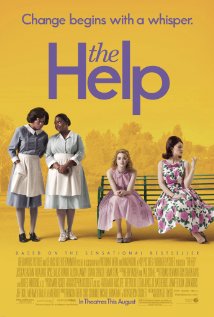
The Help
When putting together my “best of” list of books, movies etc., from this past year I put The Help in both the book and movie category. In terms of storytelling I found the narrative to be engaging—while also providing a glimpse into the day-to-day indignities to African American’s by Jim Crow.
But it’s not a perfect story—one that has garnered a lot of discussion and anger on a variety of viewers. The Association for Black Women’s Historians released a statement about the movie stating that The Help “distorts, ignores, and trivializes the experiences of black domestic workers,” specifically that it resurrects the “mammy” stereotype, misrepresents dialect of African American culture and speech, and “limits racial injustice to individual acts of meanness” by “group of attractive, well dressed, society women.”
In contrast, an article in the New Republic by John McWhorter makes the argument that the movie sought by The Help’s critics “might make a kind of sense if American society were actually as resistant to acknowledging racism as we are so often told. One might see the film as a precious opportunity to introduce a forgotten story, and understandably wince to see the focus on living rooms rather than streets, women in the afternoon rather than Klansmen at night, and sprinklings of harmony in a story that should be about gunshots and fire hoses.”
Like any good historian, I recognize that bringing these stories to life often brings with it controversy, which is an important part of ensuring a dialogue, and making sure that no one version dominates the telling of this history. Part of why I found the story so effective was that it parsed down, to a granular level just how specific “separate but equal” became. That the very real danger of Jim Crow was that any given moment, the offense taken by whites in the south could be used as a reason for penalty—even if it was as non-violent losing your job, a consequence of incredible impact when opportunities for African American women were so hard to come by.
I do agree that there is also the problem of agency—that the narrative is on one level about a white woman reaching out to African American women asking them to tell their story rather than a group of African American women acting on it themselves. However, it remains compelling because of the way the book and movie acknowledges how the ugliness, the brutality, and the violence of a time barely fifty years past could have manifested itself in a more insidious nature—where many southern Americans were complicit in perpetuating a system of culture and fear, of power right down to the simple act of going to the restroom.
Red Tails
I had held off on putting together this post because I wanted to wait to see the Anthony Hemingway film (The Wire, Ali) Red Tails. I had heard about this move a few years ago, not because I wanted to learn more about the Tuskegee Airman (I had other avenues for that) but because of my interest in science fiction. As a Star Wars fan, I had read about George Lucas’ interest in having this film made and I recognized how powerful a film this could be with his backing.
The movie is alright. Not great, but good. As a film about fighter pilots it succeeds in drawing you in to the bravery and the difficulties of fighting against German jet planes. It succeeds in showing how the Tuskegee Airman proved themselves, breaking stereotype after stereotype, in a simplistic way. In interviews prior to its release Lucas stated that he wanted to make a movie that showed 14 year old boys want courage was.
But what about how it tells the story of Jim Crow? Like The Help it lacks grit (and as a friend said, if you go in expecting Saving Private Ryan, you’ll be disappointed). It is filmed in a style that feels almost nostalgic and romantic, trying to present the narrative of fighting for your country while being treated as second class citizens.
I think this is part of its difficulty. Where The Help looks at Jim Crow and successfully illustrates its dehumanizing nature, Red Tails (though taking place roughly twenty years earlier) takes it and reduces it to single lines, and single acts that are almost apart from the heroes that it affects.
Yes, the movie tries to show that these men are being underutilized; their skills are marginalized, placing them at an Italian air base where all they do is sit around waiting for the opportunity to do what they were trained for. Yes, it underscores, without any hint of subtly the poor equipment, the crappy supplies and ridiculous missions they were given.
But the moments of overt racism—a single line in a board room in the Pentagon, a use of the n-word in the “whites only” officers club, feel like an obvious attempt to point out racism rather than allowing it to flow seamlessly in the narrative. What the movie lacks, unfortunately is the context—the larger story of the Tuskegee Airman and how they were formed, which would have added further weight (in the movie) to the accomplishments of the 332nd Fighter Group.
One last thought, I recognize that the issues I had with the portrayal in Red Tails can be construed as an argument for the movie to stray away from the singular story that Lucas wanted to tell–the snapshot of the moment where the 332nd was able to prove themselves as more than what was expected of them (and in a modern sense, prove that a big budget action movie can be made with an all African American cast and still be successful). However, I think that as far as telling the (hi)story of Jim Crow it just misses the bull’s-eye.
The Warmth of Other Suns
A few months ago I had the opportunity to listen to Isabel Wilkerson give a speech at the National Preservation Conference in Buffalo, NY. A Pulitzer Prize winning author, Wilkerson wrote an incredible book about the great migration of African Americans from Jim Crow called The Warmth of Other Suns: The Epic Story of America’s Great Migration.
Two weeks ago, on Martin Luther King Day (which I found apt) I finished the book, and thought that it offered a great counter point to the other two narratives discussed in this blog. Unlike the two movies (and book), this is a non-fiction, history book. However, simply calling it non-fiction belittles its impact, in that while being a history book, it is very much falls within the realm of popular history—one that tells the story of an important piece of American history in a real and engaging way.
Credit: isabelwilkerson.com
In short, the great migration was a period of American history that started in roughly 1915 and lasted through to the conclusion of Jim Crow in the 1960s. By the 1970s over six million African American’s had left their homes for new cities in the North and the West, and for ten years Isabel Wilkerson sought out their stories becoming, as historian Jill Lepore states in her review “a one-woman W.P.A. project. Her research took more than ten years, and is not unlike another chunk of work done by the Federal Writers’ Project: documenting the history of slavery, before its memory faded altogether.”
What I want to focus on is how Wilkerson tells the hi(story) of Jim Crow. Over the scope of seventy plus years she takes us through the lives of three individuals: Robert Pershing Foster, George Swanson Starling , and Ida Mae Brandon Gladney. In a narrative format (as opposed to using the voice of historical authority) Wilkerson allows us into individual lives, while using other sections to pull us out to see the broader context. It is an effective method, making us feel how individual decisions led to different paths out of the South, while telling us about the migration on a grander scale at the same time.
She does not hesitate to show the differences. That for some the decision to leave was a culmination of years of indignity, while for others it was due to a specific threat and fear. In using the individual stories she is able to show the vileness of Jim Crow and how no one was immune to the terror it brought to the African-American community. In the same vein she uses the mechanism to show what happened after—from the struggle to make ends meet in the north (including that all was not rosy and perfect after migration), and that each person chose to fight racism in different ways.
This can be seen through the life of Robert Pershing Foster, a surgeon who was married the daughter of the President of Atlanta University who believed “to his way of thinking, the way to change things was to be better than anybody at whatever you did, wear them down with your brilliance, and enjoy the heck out of doing it. So he had no patience for these sit-in displays, at least for his daughters anyway, much less actual violence.” (Wilkerson, 410)
What is great about this book, that movies like The Help and Red Tails cannot do with their limited scope, is that it shows the effect of Jim Crow on American history. That “many black parents who left the South got the one thing they wanted just by leaving. Their children would have a chance to grow up free of Jim Crow and to be their fuller selves. It cannot be known what course the lives of people like Toni Morrison, James Baldwin, Diana Ross, Aretha Franklin, Michelle Obama, Jesse Owens, Joe Louis…and countless others might have taken had their parents or grandparents not participated in the great migration and raised in the North or West.” (Wilkerson, 535)
The other piece that I appreciated about the book was how she used quotations from African-American writers like Langston Hughes to frame each chapter’s discussion, to show how these people expressed themselves in song, in poetry, and through literature about the life they had left behind, and the new one they had come to embrace.
A lot of history books take the chronological approach, looking at a particular period of history through the eyes of many individual stories that are illustrations of a broader historical narrative. In choosing to use three specific stories, ones that she chose for the three “paths” taken by African-Americans to escape the south, you feel more connected, and are able to understand more about why Pershing, Starling, and Gladney chose the road they took.
~~~
Official US Army Air Force Training Command photograph of 20 Tuskegee Airmen posing in front of a plane. Robert Glass is in the middle of the 3rd row. His signature, and that of 10 other colleagues are inscribed on the photograph. Credit (including caption): http://www.nps.gov/museum/exhibits/tuskegee/lgimage/air28.htm
Near the end of her book Isabelle Wilkerson states that the Great Migration was “if nothing else, an affirmation of the power of an individual decision, however powerless the individual might appear on the surface. “In the simple process of walking away one by one,” wrote the scholar Lawrence R. Rodgers, “millions of African-American southerners have altered the course of their own, and of all America’s, history.” (Wilkerson, 538)
I also believe strongly that even though some of these narratives miss the mark more than others, that these stories need to continue to be told in a popular mediums, to urge public dialogue and conversations about race in America in a very real way.
It has been a long, strange, year. On one hand it felt like it disappeared without a fuss, slipping away, month by month, day by day. Winter became Spring, Summer then Fall in a blink of an eye, but so much happened, both in the world and personally that it has its own weight and import.
And now here we are. Over the anticipation and into the 3rd day of the year two thousand and twelve (try saying that three times fast) with resolutions crying to be made, and best of lists flooding the Internet. I’ve had a year of personal triumphs and losses along with professional challenges that forced us to embrace change.
So 2011, Twenty-Eleven 2-0-1-1 I’d like to bid you adieu.
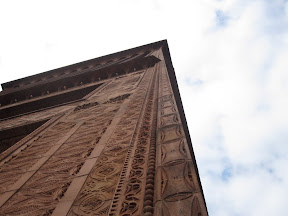
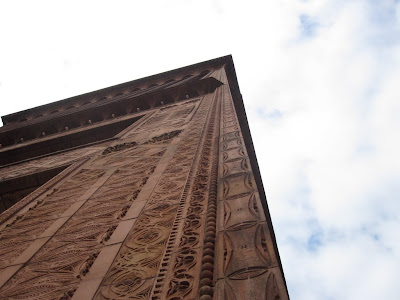
Guaranty Building in Buffalo, NY
I am grateful for another year of family. For a wedding that made it grow, and for support when personal losses flew in unexpectedly.
I am grateful for another year of friends. As my thirtieth year on earth begins, having known some of these people for up to ten years has enriched my imagination, my world view, and my heart in the ways that only friends can do.
I am grateful, once again, for a year where I could walk into work and write and talk about something I believe in and love, even when it was hard (and at times, it still is). Change is a funny thing. When you know it is coming it can be frightening, a looming monolith–daunting, but as it sweeps in it can force you to look at old ways of working and push you in new directions. Optimism is my greatest weapon.
I know I haven’t made mention of some of the larger events of the year—of stories that we’ll be talking about as historians for years to come. Tsunamis, Earthquakes, Tornadoes changing the narrative of nations and small towns for decades to come. Believe me those larger events made an impact on how I view the meaning of place and where we came from in a new light. And the death of a friend this summer emphasized that life is fleeting, and that so much of what we have needs to be embraced right here, right now.
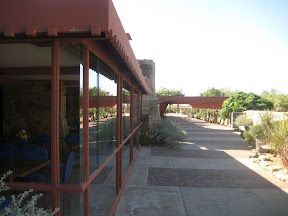
Taliesin West in Scottsdale, AZ
And then there are the typical “best of” lists. As always this is a reflection of things I’ve discovered/read/listened/saw this year.
Many of the items on this list I wrote about on the blog this year, while others have flown in under the radar (including my recent love for David Tennant and Dr. Who. As a historian, watching a Time Lord fly around space during different historical periods is amusing and at times, surprisingly poignant.) Downton Abby (Season 2 starts January 8, Season 1 is available on streaming via Netflix Instant and PBS.com) and The Hour are two other series that I haven’t talked much about on the blog, the first has been written about in many places—great acting, great drama. The Hour, a six episode series set in England during the 1950s about a one hour news program, has an intensity that surprised me.
Each of these pieces of pop-culture fed my creative soul, made me learn something new about storytelling, and were, above all else, fun to listen to, watch, and see.
So….Twenty-Twelve, what can I expect from you?
My resolutions for the year are complicated. They range from the personal (eating habits, work out goals) to the aspirational (write more, dream more). Above all else I see 2012 as the year of getting organized, to continue to live my life in a way that helps others and sends love, peace, and kindness out in the world.
It is certainly going to be an exciting year. The Olympics, the 2012 Presidential Elections (to name two) that are sure to make headlines. There will be stories to be told, and lives that will be changed.
It is also a year of moving the needle, and raising the bar. Challenging myself to take risks and leaps that I have only taken tiny, hesitant steps towards in the past. Figuring out what does come next for me personally, professionally, and creatively. So no matter how we write it 2012, Twenty Twelve, 2-0-1-2, this is the year of living life.
The materiality of preservation is very much rooted in these places and objects ability to tell a story – to evoke the intangible in such a way that makes it more certain, more reliable, more real.
For work this week I wrote a piece reflecting on the stuff of preservation. I also managed to loop in a paper I wrote during my undergraduate coursework about a pressure cooker. Trust me, it makes sense.
I’m working on a few ideas for end of the year posts. So stay tuned!
~~~
I also wanted also wanted to point out to any Baltimorians who might be reading my blog that there is an Unconference going on in Baltimore today. You can see what they’re talking about here and on Twitter #bmorehistoric.
Happy Thanksgiving! As we head on into the long weekend I thought it would be nice to think about food and foodways as a lead in to an event I attended at Woodlawn, the importance of our latest National Monument at Fort Monroe, and a review of a book about the evolution of a particular hearth and home.
On Vice and Food
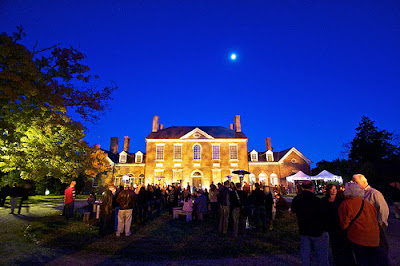
Woodlawn during the 2011 Vices that Made Virginia Event. Image from the Neighborhood Restaurant Group Flickr Page
When I was an undergraduate student I had the opportunity to take a course on foodways. We learned about the sugar and salt trade and their role in global economies while also examining objects from our kitchens to see and understand everyday life.
A few days ago I learned that my professor from this course, Barbara Carson, had passed away, and so I wanted to take a moment to reflect on what I learned from her.
Food can tell us a lot of things about the past. On one level we learn about diets—how our ancestors (or grandparents even) got their nutrition. We learn about how advances in canning and preservatives allowed food from California to be eaten in Vermont. And with more and more advances in transportation commodities like tea, sugar, salt, and spices became less of a luxury and more accessible—removing these items as limited only to the rich.
How this food was prepared gives us insight into familial roles—and the role of mealtimes in the cult of domesticity. We learned more about how that expectation changed, and the how advent of TV dinners moved families from the dinner table to the couch.
This was on my mind when I attended the second annual “Vices that Made Virginia” program at Woodlawn Plantation in Alexandria, VA. A National Trust property, this fund raiser was put on by Arcadia: Center for Sustainable Food and Agriculture —a non-profit organization bringing farming back to Woodlawn while educating children and adults on how food comes from the farm to the table.
The program itself was set up to highlight Virginia vices: cigars, bourbon, wine and of course the fresh produce, while introducing visitors to the farm and the historic site where it lay. It was, in one word, delicious.
Thinking about local food, and eating local harvests is a current trend in being sustainable not only economically but also in establishing a healthy lifestyle. It is a matter of looking back into our pasts and recognizing that sometimes the best things to eat is in your backyard.
Professor Carson’s course gave me a foundation to understand the shifts in thinking about how we eat, when we eat, and why we eat…what we eat. She also provided me with the essential underpinnings on how to look at material culture and find meaning. For that, I will be forever grateful.
Designating a National Monument
A few months ago I had the opportunity to sit in on a conversation at Lincoln’s Cottage in Washington, DC. This mini-conference was a brainstorming session, a place for attendees to envision a way to save a piece of history that is not often talked about: the history of the contraband.
In short, in May 1861, a little over a month following the shots at Fort Sumter a trio of slaves ran away to Union lines at Fort Monroe in Hampton, VA. When they arrived, the general, Benjamin Butler,chose to hold the runaways (Shepard Mallory, Frank Baker, and James Townsend) as “contraband” rather then honor the Fugitive Slave Law and return them to their owner in the Confederacy. By the end of the war half a million formerly enslaved people had looked for freedom in the same way. Their legacy, which included camps in and around Washington, DC hastened Abraham Lincoln’s decision to issue the Emancipation Proclamation and bring an end to slavery. [Learn more]
Political affiliations aside, this is a “win” for everyone. I know that we are in turmoil—that finding common ground between the left and the right is a place that our politicians can’t seem find. In designating Fort Monroe as a national monument, President Obama (in my opinion, of course) emphasized how important our cultural heritage is in our identity as Americans—not merely as liberals or conservatives, Democrats or Republicans. That is, finding common ground may involve taking a risk that will make our country stronger.
Forty years ago, historians came together to look at American history through different eyes: the eyes of women, immigrants, and African-Americans. Today, we are still working towards that goal—looking at “the forgotten” and telling their story. This National Monument at Fort Monroe is one more step in the right direction–recognizing the wide breath of stories in the American past
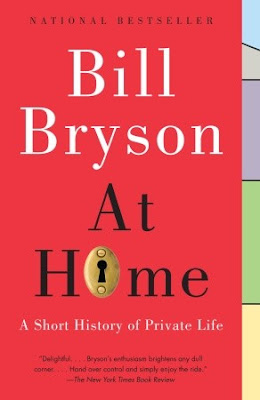
Finally, I wanted to say a few words about Bill Bryson’s At Home. It’s a book that came out a few years ago that looks at a particular home, his home to be exact, and searches for the histories of particular rooms. I’ve read Bryson before (A Walk in the Woods), and have liked his meandering tales. However, this wasn’t quite what I expected.
It’s not that it wasn’t in the same style as his other books. He uses the house—an old rectory in England—as a touchstone in telling broader stories about social changes in European architecture, family life and industry. But I had hoped for something a little bit more….structured.
I know, I know. Having read Bryson before I should have known better—but it was a little disconcerting at times to go from talking about a bedroom or a kitchen to the history of bedbugs and then to a discussion on funerary arrangements and graveyards.
That minor disappointment aside, At Home is one example of how a broader story can be told through a particular structure. Certainly not the first to use this mechanism, however it provides insights into how rooms can spark interest in the unexpected.
~~~
And with that I would like to wish everyone a very happy Thanksgiving. Eat well, be merry, (shop local), and live large.
Delay. Delay. Delay. I’m going to be honest—this post has been a challenge to conceive and write. Not because I had nothing to say, but because I didn’t know how to frame my lessons from the 2011 National Preservation Conference. Much of this has to do with the fact that I wasn’t able to see the closing plenary—which serves not only as an end cap to a week of knowledge sharing, and networking, but as a launching point for where we are going.
Thankfully, that changed with the magic of the internet. First, the usual acknowledgement: I wasn’t a normal attendee of the conference. My daily job was to serve as conference staff—sitting in on sessions, passing out evaluations, taking tickets, which meant that with the exception of a session or two (and the major plenaries) what I saw and heard was often confined to the room in which I was assigned (or the Twitterverse), but what I did hear and learn afforded a glimpse into the future.
In closing her speech (and the conference), Isabel Wilkerson, author of a book about the migration of African Americans from Jim Crow South, quoted Richard Wright re his decision to migrate to New York City.
“I was leaving the South to fling myself into the unknown . . . I was taking a part of the South to transplant in alien soil, to see if it could grow differently, if it could drink of new and cool rains, bend in strange winds, respond to the warmth of other suns
and, perhaps, to bloom”
This may be an awkward analogy but preservation is, has been, migrating. In the last ten years alone, the way we do business, the way we interact with others has changed dramatically. And it all started by sticking our toe, and in some places, jumping right headlong, into the unknown. We’ve seen how important our work is in regards to community development, we’ve stepped up about the importance of character, and how where we live, how we live, and why we live there matters. We’ve also spoken out about the importance of existing buildings in the sustainability movement. We are getting involved, making partners in ways that those outside the movement don’t expect.
But we are a reflection of events in the larger, broader world—where we as a country, as a global system have to re-think the way we’ve always done business or else run ourselves into the ground. We have to change the way we live in order to survive. Everything will not just work out “in the long run.”
That’s a pretty awful phrase, “the long run.” Often a justification to keep doing things the way they’ve always been done, because in “the long run” everything will work out the way it was meant to. It isn’t a phrase we can depend on anymore. As preservationists—heck, as historians—we have the ability to see where we’ve been and embrace change—bucking perception of our work. This conference showed me this. That all around this country there are preservation professionals taking risks, and finding new ways to meet the challenges of the coming years. So perhaps that is the biggest preservation lesson of Buffalo—that change is going to come, whether we want it to or not—but that we as a movement are prepared to meet it, to take our ethic, and transplant it in new directions, to cultivate it to respond to the the warmth of other suns…and bloom.
~~~
There are a few ways to catch some of the sessions from this National Preservation Conference. Visit www.preservationnation.org/conference for more information.
Update 11/3/11: The full documentary is now online!
Have you ever been somewhere where it was clear that the residents had so much pride in where they lived that they defied expectations? Next time you are in New York, forget the Big Apple and head North to Buffalo and you’ll see how this city has wiped away the illusions of the so-called rust belt and are actively rebuilding and investing in the future rather that allowing others to write them off.
Nothing says this more than Buffalo Unscripted, a documentary by the National Trust for Historic Preservation (yes, my employers). Earlier this year three of my co-workers went up to Buffalo and interviewed over 500 people about the city in which they live. The result is an hour long documentary that not only pulled at my heartstrings, but also made me see possibilities where I might have previously dismissed it.
The power of place is a phrase embraced by public historians. It reveals how much of our shared past is connected to where we live, where we interact, and and where we dream. For ordinary Americans it is not the site of major monument or a historic house, it is our neighborhoods, our churches and temples, our restaurants, and our homes. The power of place is the grit and the polish of an urban and rural setting; or the civic parks and landscapes where we meet. The power of place is in its community.
Two weeks ago I was in Buffalo for the National Preservation Conference and got to attend the premiere of Buffalo Unscripted. For months I had been hearing about the beautiful buildings, the enterprising people and was excited to cap off my visit in a theatre full of Buffalonians listening to how important their city was to them.
It is easy to be proud of a place like New York City, which in the media and the world’s eye exudes cool. It’s the same for cities like Chicago, DC, Dallas, San Francisco which have a reputation based on a particular image and idea of the cities personality. For places “in decline” it’s an uphill battle. How do you hold on to that pride when others put you down? How do you encourage investment when no one is able to see the promise? I say you do it Buffalo style and paint your own picture of growth, your own vision of rejuvenation, and invest in yourselves in a way that that takes the cultural capital of the past and leverages into a very real future.
Through Buffalo Unscripted I found myself encouraged by those who have made their lives and homes in a changing city. For them, where they live isn’t limited to a single building or block, rather it is about making a dream reality for an entire city. The power of place is in Buffalo’s people.
For more information about Buffalo Unscripted visit www.buffalounscripted.org, or follow hashtag #bufunscripted on twitter. The full documentary will be online soon, until then enjoy this clip about “Buffalo in one word.”
It is October! Which means I have been spending a full week here in Buffalo, NY for the National Preservation Conference. Last night I made a decision that instead of trying to write a bunch of posts for each day I would wait until I came home to share my thoughts. It will be a little bit more focused with less summary and more interpretation/reflective than I usually do. So stay tuned!
In the meantime you can follow along with the events in a variety of ways online.
I am sure many of you have heard the news. REM is over. After 31 years of working together Michael Stipe, Peter Buck, and Mike Mills have decided to move on.
I’ve taken so long to write this post, one because I was traveling (I started this on an airplane and am now finishing it on another trip), but also because I wanted to think about how I felt, especially since reactions elsewhere ran the gamut from surprise, befuddlement, to sadness.
A band born two years before my birth I am quick to admit that my gateway song into REM fandom was the ever popular Losing My Religion. As my musical education grew I found myself being drawn to songs that were a little off the beaten track (by which I mean, not Orange Crush, Stand, Man on the Moon, or Nightswimming). At present my favorite is Walk Unafraid.
Walk unafraid
I’ll be clumsy instead
Hold my love me or leave me
High
Say “keep within the boundaries if you want to play”
Say “contradiction only makes it harder”
How can I be
What I want to be?
When all I want to do is strip away
These stilled constraints
And crush this charade
Shred this sad masquerade
I don’t need no persuading
I’ll trip, fall, pick myself up and
Walk unafraid
I’ll be clumsy instead
Hold my love me or leave me
High
I’ll also admit that I kind of loved the CD reviled by many (Reveal). Especially She Just Wants To Be.
It’s not that she walked away,
Her world got smaller.
All the usual places,
The same destinations,
Only something’s changed.
It’s not that she wasn’t rewarded
With pomegranate afternoons
And Mingus, Chet Baker and chess.
It’s not the stampeding fortune,
Of prim affectations.
She’s off on her own
But she knows
Now is greater than the whole of the past
Is greater, and now she knows
She just wants to be somewhere
She just wants to be
She just wants to be somewhere
She just wants to be.
Perhaps I can say that my relationship with REM was solidified by seeing them live at the Patriot Center in 2003 where despite floor seats among a largely apathetic crowd I loved Michael Stipe’s dancing and steady vocals in addition to the energy from the whole band.
That being said REM’s last swing through Merriweather Post a few years ago with Modest Mouse and The National remains the best concert I’ve been to. With three fairly well known bands I expected a short set but REM stayed on for over two hours and put the other two to shame.
While I wrote this post I was listening to an old episode of All Songs Considered called “Splitsville: Breaking Up With Your Favorite Band“. I know that many fans out there broke up with REM a long time ago. Perhaps it’s because nothing could really compare to other earlier work, or because they stayed within their musical boundaries, which dated their sound in a world of Lady Gaga and pop music. Whatever the case may be, there is something sad about never hearing another new nonsensical yet soulful lyric.
As my bro in law said when I shared the news:
“You know, everybody hurts but I find that if I surround myself with shiny happy people holding hands, I don’t feel like I’m losing my religion…in fact, I feel like the man in the moon.”
I think what I will miss the most of all is the poetry of REM. The way the lyrics flung me into new visions and played in the background of all of my early attempts to write fiction. Despite their disbanding I look forward to their catalog inspiring me for years to come.
Oh this lonely world is wasted
Pathetic eyes, high alive
Blind to the tide that turns the sea
This storm that came up strong
It shook the trees, and blew away our fear
I couldn’t even hear
…..
Oh this could be the saddest dusk I’ve ever seen
Turn to a miracle, high alive
My mind is racing, as it always will
My hands tired, my heart aches
I’m half a world away
How does a play that rhymes Keep us all in line Is it the lovely dresses? Or simply all the messes
The scrapes and schemes With portents and themes Bringing out death and love Or all of the above
But in all the wonder of the stage We are released from the worldly cage To watch in awesome delight As the story tries to set things right
In the last month I’ve had the opportunity to attend four different plays. The first I’ve reviewed before: a tale of witches, assumptions, and finding the truth. Wicked with a first time watcher is always great, and this time I could geek out and sing along.
The other three plays were part of my usual love of Shakespeare. With the start of the 2011-2012 season I experienced my usual double header with Free For All and a newly translated French play that was all in rhyme (much better than my attempt above). However, before we talk about those shows I thought we could talk about another version of the Bard work that I saw in Staunton, VA.
Stripped Down Hamlet
A group of girlfriends and I spent the weekend in a main street town two hours west of DC. Staunton is one of those small towns that have eateries that embrace the local food movement, shops that are all about supporting local merchants, rehabbed local movie house, and a historic hotel. It also has one other thing: a recreation of the London Blackfriars Playhouse.
Blackfriars is the name of two different theatres that existed in London. The first was a children’s theatre replaced by an Elizabethan playhouse that became home to Shakespeare’s company. Both theatres were built on the grounds of Blackfriars monastery. In building this re-creation, The American Shakespeare Center (ASC) intended to mimic Shakespeare’s “original staging conditions.”
I’ve been a season ticket holder of the Shakespeare Theatre in DC for three years now. With each show they put on I am amazed by what a theatre with a strong budget can do with creative staging. Seeing a show at Blackfriars is a completely different experience.
A Silver Infinity Necklace (which I own) with "This Above All: To Thine Own Self Be True" inscribed upon it.
To Thine own Self be True. On this particular trip, we attended a production of Hamlet. In contrast to what I’ve usually seen, ASC presented the show with lights fully on, audience members on the stage, and intermission music that pulled from modern day tunes with the mood of the sixteenth century play. For Example: Letters to Cleo’s Cruel to be Kind, Simon and Garfunkle’s Sound of Silence.
Devoid of the trappings of set the show forced the audience to pay attention to the dialogue, and the language of Shakespeare. The lack of set also pushed the actors and through their delivery turned Hamlet’s insanity and subsequent tragedy into a comedy filled with dark black humor.
One last comment on the lighting: Usually when sitting in a darkened theatre the viewer feels disconnected from the story before them. Part of the reason that this version of Hamlet worked so well is that we became a part of the conversation. With the ability to make direct eye contact during the show, I felt as if the story was being told to us, as active agents in Hamlet’s demise, rather than merely a passive presentation.
You can see Hamlet at the American Shakespeare Center in Staunton, VA through November 2011.
Et Tu Brute: Shakespeare’s Julius Caesar
The third show I saw last month was the first show of the 2011-2012 Shakespeare Theatre Company (STC) season, which was also a part of Free For All. This year’s free show was Julius Caesar, which while far from perfect (my group wasn’t a big fan of the actor playing Mark Antony), didn’t disappoint.
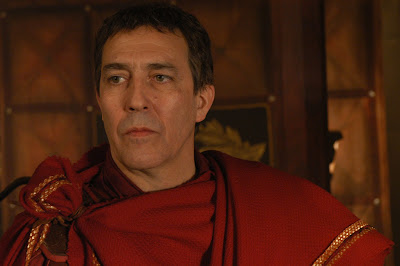
Ciarán Hinds as Gaius Julius Caeser in HBO's Rome
Presented with as much historical accuracy as possible (at one point Caesar is groomed using these scythe like scrapers called a strigil), the show evoked all the drama surrounding Caesar’s demise with gusto.
With some entertaining hand-to-hand combat and on stage blood, you really felt sucked into the fatal events on the Ides of March.
I walked away from the show wanting a refresher on the way historians describe Caeser’s death, since much of the popular depictions of his death are often drawn from Shakespeare’s play. So much so that you expect familiar lines in other unrelated representations of the rise and fall of Gaius Julius Caeser. I remember when watching the HBO show Rome (which tried to be gritty and realistic) that I expected “E Tu Brute” (click for an interesting conversation about the source of the quotation) to be uttered when Ciarán Hinds (Ceaser) met his end on the senate chamber floor.
There are many different ancient historians of Julius Caeser, and the two I am familiar with are Suetonius and Plutarch. While Suetonius is know for writing his histories by theme, Plutarch wrote about history in a more chronological fashion. I thought I would pull the section in Plutarch’s Lives of Caesar that describes how Caesar died.
Well, then, Antony, who was a friend of Caesar’s and a robust man, was detained outside by Brutus Albinus, who purposely engaged him in a lengthy conversation; but Caesar went in, and the senate rose in his honour. Some of the partisans of Brutus took their places round the back of Caesar’s chair, while others went to meet him, as though they would support the petition which Tullius Cimber presented to Caesar in behalf of his exiled brother, and they joined their entreaties to his and accompanied Caesar up to his chair. But when, after taking his seat, Caesar continued to repulse their petitions, and, as they pressed upon him with greater importunity, began to show anger towards one and another of them, Tullius seized his toga with both hands and pulled it down from his neck. This was the signal for the assault. It was Casca who gave him the first blow with his dagger, in the neck, not a mortal wound, nor even a deep one, for which he was too much confused, as was natural at the beginning of a deed of great daring; so that Caesar turned about, grasped the knife, and held it fast. At almost the same instant both cried out, the smitten man in Latin: “Accursed Casca, what does thou?” and the smiter, in Greek, to his brother: “Brother, help!”
So the affair began, and those who were not privy to the plot were filled with consternation and horror at what was going on; they dared not fly, nor go to Caesar’s help, nay, nor even utter a word. But those who had prepared themselves for the murder bared each of them his dagger, and Caesar, hemmed in on all sides, whichever way he turned confronting blows of weapons aimed at his face and eyes, driven hither and thither like a wild beast, was entangled in the hands of all; for all had to take part in the sacrifice and taste of the slaughter. Therefore Brutus also gave him one blow in the groin. And it is said by some writers that although Caesar defended himself against the rest and darted this way and that and cried aloud, when he saw that Brutus had drawn his dagger, he pulled his toga down over his head and sank, either by chance or because pushed there by his murderers, against the pedestal on which the statue of Pompey stood. And the pedestal was drenched with his blood, so that one might have thought that Pompey himself was presiding over this vengeance upon his enemy, who now lay prostrate at his feet, quivering from a multitude of wounds. For it is said that he received twenty-three; and many of the conspirators were wounded by one another, as they struggled to plant all those blows in one body.
As I’ve talked about before, representations of history are often just as useful as historical truth. They reveal subtle cues regarding the time in which it was written, while also providing a glimpse into the lasting legacy of a particular piece of history.
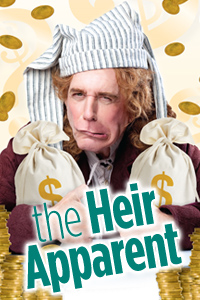
Just four days after seeing Julius Caesar I saw a new staging by the STC called The Heir Apparent, written by Jean-François Regnard in 1708. For the first time in a long time I walked into the show not knowing what to expect, and about two hours later I walked out smiling. Presented entirely in rhyme, this translation by David Ives (who also did The Liara few years back) was engaging and light-hearted. By no means a serious play, it follows a young man Eraste who wants to marry, but can’t until his miserly uncle names him the heir apparent. Hijinks ensue, including some cross dressing and a surprise guest that even now we can’t stop talking about.
Ives even inserts, in that clever way that translators do, some more modern allusions bridging the gap between 18th century France and 21st century Washington, D.C. Sometimes this bothers me, but in this case not so much. Probably, in the end, because the jokes flowed seamlessly into the rhyme scheme and were so enigmatically delivered by the players on the stage.
Even the reviewers got into the fun, with Peter Marks of the Washington Post presenting his opinion the same rhyme scheme as the show.
I highly recommend seeing this show if you can, its run ends October 23. For more information visit www.shakespearetheatre.org
 When I was young, I asked my dad where I got my name from. He explained to me that I was not, in fact, named after the poet. I was named after my ninth-great-grandfather who left England and settled in Boston in the 1630s. His son, James, built a house in Dorchester, just outside the city, that still stands to this day. One year for Thanksgiving, my dad took me and my brother to Boston, where we had the chance to see the Blake House and visit a nearby cemetery containing Blakes from many generations ago.
 I now have a more precise answer as to where my name comes from. Blake is the old English word for black, and years ago I read speculation that the name was applied to an ancestor with black hair or dark skin. Surnames were often adopted to tell two people with the same first name apart. This was not the case with our family. About two hours west of London lies the county of Wiltshire. In 1194, Richard I established the parish of what is known today as Blacklands just outside the market town of Calne in Wiltshire. The parish contains only about 500 acres, and it name refers to the dark forest that once existed there.
 The family currently living at Pinhills could not have been kinder to us. They gave us an expert tour, allowed us to take plenty of photographs, and then invited us in for a proper English tea – complete with China and homemade cake. We had a nice chat about history and politics. Although we did not take pictures inside the house, I did have the chance to touch some very old ceiling beams, which likely were part of the materials salvaged from the original manor house. It was truly awe inspiring to have such a physical connection with a place that has so much history, especially so much history connected with my family.
 As if the family connections on our trip could not get any more enjoyable, the next day we drove back to London and I went to Westminster Abbey. At first it looked like I was not going to be able to go in, as I arrived close to time from the last admission. I told a marshal that there are memorials to two of my cousins in the Abbey – the poet and Admiral Robert Blake. The marshal called her boss, the head marshal, and when he heard my name, I got VIP treatment. I was whisked inside without waiting in line or paying admission. I got to see parts of the Abbey usually out-of-bounds to tourists, which was a good thing because the memorial to Robert Blake is located just off the tourist route.





 Just four days after seeing Julius Caesar I saw a new staging by the STC called
  ...this is what comes next